
You can troll for hours with expensive lures and still come home wondering where you went wrong. In many cases, the fish are not the real problem. A few common trolling mistakes can ruin a lure’s action, place it at the wrong depth or leave you fishing water that holds no bait. The good news is that most of these problems are easy to correct.
This guide covers the practical lessons I have learned from years of offshore fishing. We will look at trolling speed, wire traces, snap swivels, lure depth, bait schools, lure spreads, hook condition and the best times to target different species. Fix these details and you will give yourself a much better chance of catching mackerel, tuna, wahoo, dolphinfish and marlin.
Why These Trolling Mistakes Cost You Fish
Successful trolling is not just a matter of throwing several lures behind the boat and driving around. Every lure is designed to work within a particular speed range and at a particular depth. Your terminal tackle can change its action, while your boat position and lure spread determine whether the presentation looks natural.
The biggest trolling mistakes normally fall into three groups: using the wrong tackle, presenting the lures incorrectly and trolling in an unproductive area. You do not need to buy a completely new setup to fix them. Start by checking how each lure swims beside the boat, then concentrate your effort around bait, birds, current lines and reef structure.
Trolling Mistakes #1: Match Your Speed to the Lure
One of the most common trolling mistakes is using the same speed for every lure. A large deep-diving minnow with a substantial bib is very different from a shallow-running lure with a small bib.
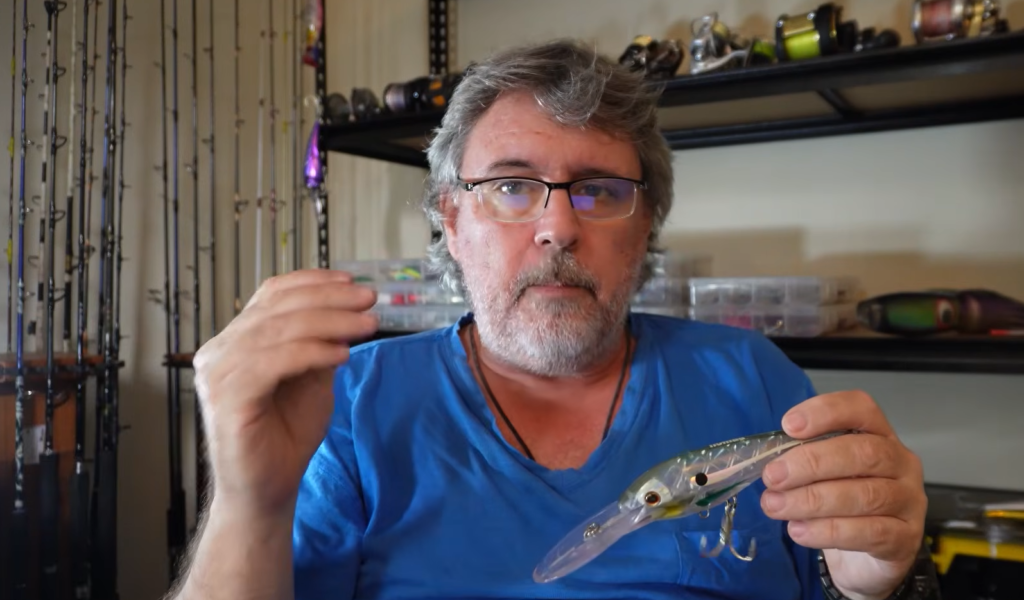
For deep divers such as a Nomad DTX, around 6 to 8 knots is a useful working range. I normally prefer 7 to 8 knots, with approximately 8 knots producing a sharp, attractive action. This is a strong general option when chasing mackerel, tuna and other fast pelagic fish.
A shallow-running minnow with a small bib may need to be slowed to around 3 or 4 knots. Push some of these lures to 6 or 7 knots and they can roll, spin or skip across the surface. They can still be excellent for trolling slowly along a shallow reef edge for coral trout, but only if you use them as intended.
Some purpose-built high-speed lures will handle 8 to 12 knots. When specifically targeting wahoo or yellowfin tuna, I often work around 10 to 12 knots. There is rarely a need to charge along at 15 knots unless the lure has been designed and tested for it.
Trolling Mistakes #2: Avoid Long, Heavy Wire Traces
Another of the major trolling mistakes is attaching three or four feet of heavy wire to a lure, followed by an oversized ball-bearing swivel. The whole setup becomes bulky and visible, and that large swivel can create bubbles as it travels through the water. A wahoo may even attack the swivel and cut off the complete rig.
If wire is necessary, use a short bite trace designed only to protect the line from the fish’s teeth. I always use wire when deliberately chasing wahoo because bite-offs are so common. For mackerel in close, however, I usually troll without wire. I may occasionally lose a lure, but the lighter and less visible presentation produces more strikes for me.
That is a personal choice rather than a rule. If you prefer the security of wire, both soft multi-strand and single-strand wire can work. Keep it short, neat and matched to the fish you are targeting.
Visit Fishing Lures That Do the Job for the hard-bodied, soft plastic, surface and squid-style lures I recommend for particular situations.
Trolling Mistakes #3: Use Small, Strong Snap Swivels
Oversized terminal tackle can kill the action of a lure. Cheap snaps may also straighten, open or break when a powerful fish strikes. These trolling mistakes can cost you the only bite you receive all day.
Choose the smallest snap swivel that still has a suitable strength rating. It should be compact enough to let the lure swim freely but strong enough to handle the target species. Premium swivels are expensive, but a small, high-quality swivel is far better than a huge, cheap one that upsets the lure or fails under pressure.
Do not attach a sinker in front of a bibbed trolling lure unless the complete rig was specifically designed to be fished that way. Most hard-bodied lures have been built to reach their stated depth without extra weight.
Trolling Mistakes #4: Test Every Lure Beside the Boat
Before letting a lure out into the spread, place it in the water about five feet behind or beside the boat. Bring the boat to your intended trolling speed and watch the lure carefully.
It should track straight and produce a consistent action. If it pulls sharply to one side, spins or repeatedly breaks the surface, do not send it 50 metres behind the boat and hope it improves. Replace it with one that swims properly and inspect or tune the faulty lure later.
Failing to test the action is one of the easiest trolling mistakes to prevent. This quick check takes seconds and stops you wasting hours with a lure that is not fishing effectively.
Trolling Mistakes #5: Stop Trolling Dead Water
Pretty blue water does not automatically hold fish. You need life, food or structure. Continually trolling through water with no bait, birds, current lines, surface activity or marks on the sounder is one of the most expensive trolling mistakes because it burns time and fuel without giving your lures a realistic chance.
Watch the sounder for bait and fish. Scan the sky for working birds, and look across the water for tide lines, colour changes, floating debris or bait being pushed to the surface. If the open water looks lifeless, move towards reef edges, isolated bommies or known contour lines. Predators and bait are much more likely to gather around these features.
Some days remain difficult regardless of how well you fish. However, moving between signs of life and productive structure is far better than trolling aimlessly through empty water.
Trolling Mistakes #6: Find the Right Lure Depth
An old fisherman’s rule of thumb is that high-flying birds may indicate bait holding deeper, while birds working close to the surface usually mean the bait is high in the water. Treat this as a clue and confirm it with your sounder rather than relying on it blindly.
If the bait is deep, run deep-diving lures. If baitfish and predators are breaking the surface, add shallow runners. A balanced spread can include both so you cover two levels at once: deep divers closer to the boat and shallow lures farther back.
Running every lure at the wrong depth is another of the trolling mistakes that can make good water appear empty. Put your lures where the bait and predators are actually holding.
Trolling Mistakes #7: Work Around Bait Schools
When a bait ball is being attacked on the surface, do not drive directly through the middle of it. The boat can split the school, push it down and ruin the feeding activity for everyone nearby.
Give the school enough room and troll around its outside edge with shallow-running lures. Small tuna feeding on tiny bait may also be prey for larger mackerel, wahoo and other predators. Do not assume the visible fish are the largest fish in the area.
Charging through an active school is one of those trolling mistakes that is avoidable with a little patience. Work the edges, watch the direction the bait is moving and make controlled passes.
8. Keep Your Lures Closer to the Boat
Many anglers troll their lures much farther back than necessary. Excess line can lie flat across the surface and reduce the action of a skirted lure. Instead of porpoising and leaving an attractive smoke trail, the skirt may simply swim below the surface like a lifeless object.
Fish such as marlin are often inquisitive and will come surprisingly close to the engine wash. Dolphinfish, tuna and wahoo may sit slightly farther back, around the edge of the white water, but they do not normally need a lure half a kilometre behind the boat.
My short corner can be only 30 to 40 feet behind the boat. From there, I stagger each additional lure by about 20 feet. Avoiding excessively long drop-backs is one of the simplest trolling mistakes to fix, and it also makes the spread easier to manage.
9. Build a Clean, Staggered Lure Spread
With four lures, I use roughly 20 feet of separation between each position. The pattern begins with the short corner, followed by the long corner and then the rigger positions. This creates a compact group that resembles a small bait school while leaving enough distance to reduce tangles.
A staggered spread also behaves better when the boat turns. The inside lures slow down, the outside lures speed up and the complete pattern moves through the turn without crossing over itself.
Setting every lure at the same distance is one of the common trolling mistakes that leads to tangles and lost fishing time. Stagger them, make gentle turns and watch each lure after changing course.
10. Cover Productive Ground and Check Your Hooks
When bait and bird activity are difficult to find, cover more ground—but cover the right ground. Follow a reef edge, contour line, current boundary or tide line instead of crossing featureless water. Trolling often takes time, so do not make one short pass and assume there are no fish in the area.
Before starting, inspect every hook point. Replace rusty hooks and any points that are blunt, damaged or rolled over. Some hooks can be touched up with a file, while badly corroded hooks should be discarded. You may troll for four hours to earn one strike; do not lose that fish because you ignored the hooks.
Poor hook maintenance is among the most frustrating trolling mistakes because everything can work perfectly until the moment that matters most.
Choose the Best Time for Your Target Species
For mackerel, early morning and late afternoon are normally productive periods. The middle of the day can be slower. Marlin, tuna and dolphinfish can be caught throughout the day, although a tide change may create a stronger bite window.
Plan around your target species, tide and weather conditions. Before fishing in Queensland, also check the current Queensland recreational fishing rules for applicable size limits, possession limits, closures and gear restrictions.
Final Checklist: Fix These Trolling Mistakes
Before your next trip, run through this quick list:
- Match the boat speed to the lure design.
- Use only a short bite trace when wire is required.
- Fit compact, high-quality snap swivels.
- Test every lure beside the boat before setting it.
- Look for bait, birds, current lines and structure.
- Match lure depth to the depth of the bait.
- Troll around bait schools instead of through them.
- Keep the spread reasonably close to the boat.
- Stagger the lures by about 20 feet.
- Cover productive ground and use sharp, clean hooks.
Correcting these trolling mistakes will not guarantee a fish every trip—nothing in fishing can do that. It will, however, make every lure in your spread work more effectively and keep you in productive water for longer.
For more practical fishing tips, printable guides and bundle packs, visit the Shannons Fishing Resources page.
More Fishing Guides & Resources
Want more practical fishing tips you can use straight away? Check out the latest Shannon’s Fishing PDF guides covering rigs, bait tricks, lure techniques, and proven methods for catching more fish around Australia.