
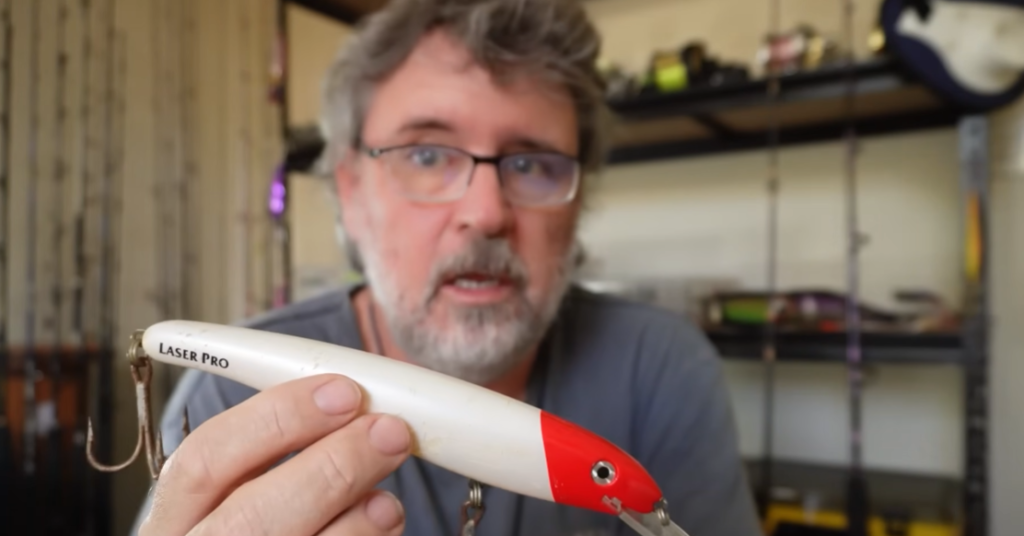
The Halco 190DD is one lure I nearly always take when I go offshore trolling, especially during mackerel season. It is a proven Australian lure that can catch Spanish mackerel, spotted mackerel, wahoo, tuna and plenty of other offshore species.
However, owning a good lure does not guarantee fish. During more than 20 years working in a tackle shop, I regularly had anglers bring these lures back and say they had trolled for hours without getting a strike. In most cases, the lure was not the problem. The way they had rigged or positioned it was stopping it from working properly.
In this guide, I will show you how I run the Halco 190DD, the tackle you actually need, the difference between the diving models, the best trolling distance and the common mistakes that can cost you both strikes and lures.
Why the Halco 190DD Is So Effective Offshore
The Halco 190DD gives you a large baitfish profile without requiring an oversized trolling outfit. It has a strong action, gets below the surface disturbance and can be worked effectively from a normal trailer boat.
The Halco 190DD version dives to approximately two metres. That makes it a useful shallow-running or subsurface lure for mackerel and other pelagic fish feeding around bait schools. It also produces less resistance than some very deep-diving lures with much larger bibs.
That lower resistance matters. You can troll it comfortably on sensible fishing gear instead of buying a heavy outfit just to pull the lure through the water. It is also reasonably priced compared with some premium bluewater trolling lures, yet I have found it every bit as dependable.
For the manufacturer’s current model details, colour range and specifications, see the official Halco Laser Pro 190DD product page.
Best Tackle for Trolling a Halco 190DD
You do not need a TLD 25, TLD 30 or another extra-heavy outfit to troll this lure. One of my preferred setups is a short 8-kilogram stroker-style rod matched with an overhead reel such as an older Speedmaster or a TLD 15. Ten-kilogram monofilament is enough for this style of trolling.
If you prefer a spinning reel, a quality 5000-size reel on a short PE 2–3 rod is also a very capable Halco 190DD combination. I caught a 23-kilogram mackerel on a 5000-size Stradic, which shows that balanced tackle can handle a very good fish.
The rod should have enough strength through the lower section to control a mackerel, but it does not need to be a broomstick. A responsive tip helps absorb lunges and makes it easy to watch the Halco 190DD action while trolling.
Halco 190DD vs XDD: Know Your Diving Depth
The different bibs determine how deep the lure will run. According to Halco’s current specifications, the Laser Pro 190 range includes the one-metre STD, two-metre DD and six-metre XDD models.
The Halco 190DD is the two-metre option. Its smaller bib creates less pull, making it ideal as the longer, shallower lure in a trolling spread. The XDD has a much larger bib and is designed to get deeper.
Do not assume every Laser Pro has the same diving depth just because the body shape looks similar. Check the exact model before putting it into your spread. Mixing shallow and deep divers is a good way to cover different parts of the water column until the fish show you where they are feeding.
Visit Fishing Lures That Do the Job for the hard-bodied, soft plastic, surface and squid-style lures I recommend for particular situations.
Mistake 1—Using the Wrong Towing Point
Before trolling a Halco 190DD or a deeper-diving model, inspect the attachment area around the nose and bib. Do not simply clip onto whichever point is easiest to reach.
Attach the lure to its proper reinforced towing point. On the models shown in the video, I tow from the nose rather than clipping onto the bib itself. I have seen anglers hook good fish, load the rod and then retrieve nothing except a broken bib. They lose the lure and the fish at the same time.
Before trolling any model, look for the fish ring or nominated tow point and check the manufacturer’s directions. This quick inspection can save an expensive mistake.
Mistake 2—Putting Too Much Wire in Front of the Lure
The most common mistake I have seen is a long wire trace fitted in front of a Halco 190DD. Anglers know mackerel have sharp teeth, so they add one or even two metres of heavy single-strand or multi-strand wire. That long trace can restrict the lure’s action and may reduce the number of strikes.
My preferred setup is monofilament without wire. Yes, there is a small risk of losing a lure, but in my experience the improvement in lure action and strike rate is worth that risk.
Mackerel often attack from behind and are commonly hooked on the rear treble, so bite-offs are less frequent than many anglers expect. Wahoo are more likely to slice through the leader cleanly.
If you are not comfortable running straight mono, use only a short bite trace of roughly 15 to 20 centimetres. Keep it just long enough to protect the leader from the fish’s teeth.
This is my own field-tested approach and it differs from Halco’s general recommendation to use wire when targeting toothy fish. Consider the species present, lure value and your own tolerance for losing gear before choosing your leader.
How to Rig the Halco 190DD
There are two simple ways to connect the Halco 190DD. The first is a small, high-quality ball-bearing snap swivel or cross-lock snap attached to the correct towing point. Avoid bulky terminal tackle because it can interfere with the lure’s movement.
The second method is to crimp monofilament directly to the towing eye. If you use this method, form a proper Flemish eye instead of a tight, undersized loop.
The round eye gives the lure freedom to move and can act as a backup if a poorly made crimp begins to slip.
Whichever connection you choose, test the Halco 190DD beside the boat before setting it back. Make sure it tracks straight, has a sharp action and does not roll out at your trolling speed.
How Far Back Should You Troll It?
Do not empty half a spool behind the boat. When a lure is set too far back, the line can lie across the surface and take the energy out of its action. Instead of looking like a fleeing baitfish, it may become little more than a slowly wobbling piece of plastic.
In a normal trailer boat, I generally run the shallow Halco 190DD lures about 50 to 80 feet behind the rod tip. The line should enter the water cleanly and maintain enough tension to keep the lure working hard.
Pelagic fish are often willing to hunt close to the prop wash, so there is no need to send every lure a huge distance behind the boat.
The exact distance depends on the size of your boat, sea conditions and the rest of your trolling pattern. Watch the lure and adjust it until it has the action you want.
Build a Tangle-Free Mackerel Trolling Spread
A good four-lure spread can include two shallow Halco 190DD lures farther back and two deeper divers closer to the boat. I might place the shallow lures at about 70 and 80 feet, then run the deeper lures at roughly 40 and 50 or 50 and 60 feet.
The important point is to stagger every lure. Do not run two lures at exactly the same distance. The separation helps the spread stay organised when the boat turns and lets you cover several depths at once.
If you are new to trolling, start with two lures. Learn how they behave during turns before adding more rods. A smaller spread that fishes properly is better than four tangled lines.
Best Halco 190DD Colours for Mackerel
I have caught fish on many colours, so do not become obsessed with finding one magic pattern. A red-and-white lure is a reliable starting point in tropical water, and gold has caught plenty of fish for me over the years.
Purple has also been an excellent performer lately. In southeast Queensland and northern New South Wales, the gold-brown King Brown pattern is well worth trying for mackerel.
Carry a few contrasting colours and let the fish decide. If one Halco 190DD keeps getting hit, put a similar colour or profile on another rod.
Colour matters, but correct rigging, strong lure action and placing your spread around active bait are usually more important.
Quick Halco 190DD Trolling Checklist
- Match the lure to a balanced 8–10-kilogram trolling outfit or a quality 5000-size spin setup.
- Confirm whether you have the STD, DD or XDD model and know its diving depth.
- Attach the lure to the correct reinforced towing point.
- Avoid a long, heavy wire trace that kills the lure’s action.
- Use a small quality snap or a properly crimped Flemish eye.
- Test every lure beside the boat before sending it back.
- Run shallow lures about 50 to 80 feet back as a starting point.
- Stagger every lure in the spread to reduce tangles during turns.
- Try red and white, gold, purple or King Brown colour patterns.
- Check the current Queensland recreational fishing rules before targeting mackerel because size limits, possession limits and seasonal closures can apply.
The Halco 190DD has earned its reputation because it is simple, versatile and effective. Give it clean water, plenty of freedom to move and a properly arranged spread, and it can be one of the most dependable mackerel lures in your tackle box.
Have you used one offshore? Let me know what species you catch, which colour works best in your area and whether you prefer wire or monofilament.
More Fishing Guides & Resources
Want more practical fishing tips you can use straight away? Check out the latest Shannon’s Fishing PDF guides covering rigs, bait tricks, lure techniques, and proven methods for catching more fish around Australia.