
Catching big mulloway is not just a matter of luck. Most anglers who struggle with these fish make the same mistakes repeatedly: fishing dead water, choosing the wrong tide, using stale bait, making too much noise or fishing gear that is far heavier than necessary.
If you want to catch big mulloway more consistently, you need to put the whole puzzle together. The spot matters, but so do the bait, current, moon, rig, timing and way you behave around the water.
After more than 40 years of chasing mulloway in rivers, from bridges and around offshore reefs, these are the mistakes I see costing anglers the most fish.
Why Big Mulloway Are So Difficult to Catch
Large mulloway are powerful, cautious ambush predators. They often hold where they can stay out of the strongest current and wait for food to be washed past them.
That might be a deep river hole, the edge of a bridge light, a rock wall or the back edge of an offshore reef.
There is no single magic bait, tide or moon that guarantees a fish. The real key to big mulloway is learning to recognise lively water and then presenting a fresh bait naturally without spooking the fish.
1. Stop Fishing Dead Water
One of the biggest mistakes anglers make is fishing a favourite spot simply because it has produced before. A good mulloway spot can become a bad mulloway spot on the wrong tide.
Before setting up, look for signs of life. Watch for baitfish, birds, surface activity and marks on the sounder. If the water appears empty and lifeless, it probably is.
Sitting there for several hours will not make big mulloway suddenly appear.
Move to another hole, bridge, wall or reef edge and look again. Where you find bait, you have a much better chance of finding predators.
The old saying is worth remembering: a good mulloway spot is a bad mulloway spot on the wrong tide.
2. Fish a Running Tide, Not Slack Water
The best tide varies between locations, so local knowledge is always important. However, I have generally done best on moving water, especially a low tide followed by the first part of the run-in tide in river systems.
Big mulloway use that moving water to find an easy meal.
Slack water is usually coffee time. Mulloway use current to their advantage, but that does not mean they always sit in the fastest flow.
They are ambush feeders and often hold behind structure or down in a hole where they can conserve energy while bait is carried past.
When targeting big mulloway, look for current flowing past a slower pocket. That change in water speed can create the perfect feeding lane.
Around bridges, bars and strong tidal water, always put safety first and fish only when conditions suit your boat and experience.
3. Be Quiet When Chasing Big Mulloway
Noise is one of the most overlooked reasons anglers fail, particularly in shallow rivers, bays and along rock walls.
Sound and vibration travel through the boat and surrounding water. Large, wary fish do not need much encouragement to leave.
Do not drop sinkers on the deck, stomp around, slam hatches or let the anchor chain rattle over the side. Keep the radio down and avoid loud conversations.
If you are land-based, tread lightly on jetties, bridges and rocks.
Serious big mulloway fishing often means sitting quietly for hours with someone patient enough to do the same. That noisy mate who cannot sit still may be better left at home.
For the rods, reels, leader and terminal tackle I recommend, visit my Mulloway Fishing Gear page.
4. Use Fresh or Live Bait
Big mulloway will eat a wide range of food, and an old packet of frozen bait can occasionally catch one. However, if you are deliberately chasing a 20 or 30-kilogram fish, fresh bait gives you far more confidence.
Collect bait before the session whenever possible.
Fresh beachworms are excellent from the beach. In rivers, live mullet, salmon, pike and locally available baitfish can all work.
Offshore, live pike, yellowtail scad, slimy mackerel or freshly caught squid are strong options.
Live bait is my first choice. If you cannot keep it alive, ice it immediately and use it that day or night.
Fresh bait looks better, smells better and presents more naturally to big mulloway.
Always identify your bait correctly and check the rules where you fish. Queensland anglers can confirm current requirements on the official Queensland tidal-water size and possession limits page.
Anglers in other states should check their own fisheries authority before collecting or using baitfish.
5. Stop Fishing Unnecessarily Heavy Gear
Many anglers arrive with 80-pound main line, 100-pound leader and enough drag to tow the boat.
In most river and beach situations, that is unnecessary. Big mulloway are powerful, but they generally use their body weight and the current rather than charging straight into cover like some reef species.
For much of my offshore big mulloway fishing, a 30-pound outfit has been enough. I have stopped fish around 50 to 60 pounds on this class of gear.
A drag setting of roughly five kilograms provides plenty of pressure when the tackle is balanced and the fish is played properly.
That does not mean fishing recklessly light. Reef edges, pylons and rock walls can still cut a leader.
Match the leader to the structure and conditions. The point is to use tackle that lets the bait behave naturally while still giving you a realistic chance of landing the fish.
6. Match the Mulloway Rig to the Location
Using the same rig everywhere is another expensive mistake. My two favourite big mulloway setups are simple, but each is built for a different job.
Offshore Mulloway Rig for Reef Edges
For offshore reefs, I use what looks like an oversized floatlining rig. The sinker sits directly above the snelled hooks, with just enough weight to reach the bottom in the current.
Pin on a live pike, yellowtail scad or slimy mackerel and make a slow, controlled drop down the back edge of the reef.
When the sinker reaches bottom, wind up about two turns so the bait is roughly half a metre clear.
Put the reel in gear, make sure the drag is already set and secure the rod in the holder. When big mulloway take this rig, they commonly load the rod and hook themselves.
Do not fish directly on top of the reef if the fish are cruising and feeding along its edge.
River Mulloway Breakaway Sinker Rig
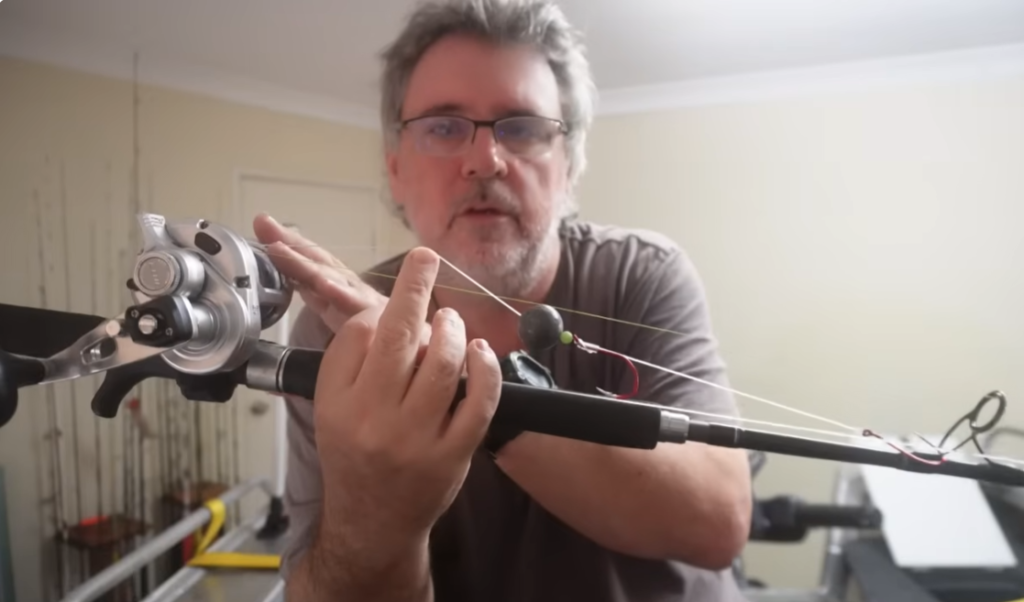
For bridges, jetties and river holes, I like a live-bait rig with a breakaway sinker.
The main leader runs from the snelled hook to a swivel. A second sliding swivel carries the sinker on a lighter length of line, usually around 15-pound breaking strain.
Cast the rig out, then feed a little line so the live bait can move away from the sinker. Leave the reel out of gear with the ratchet on.
If the sinker catches in the rocks during the fight, the light dropper can break without sacrificing the whole rig and fish.
I have used 60 to 80-pound leader on this rig, depending on the structure, while the main outfit remained much lighter.
That balance is very different from running extremely heavy line throughout the entire setup.
7. Give a Good Spot Enough Time
Chasing big mulloway takes commitment.
In shallow river water, I normally give a productive-looking spot at least three hours, often fishing the first half of the run-in tide.
On some sessions, that can mean remaining quiet from low water for four, five or even six hours.
Offshore is a little different. Big mulloway often patrol around a reef, so a couple of hours around sunset can tell you whether fish are present.
If there is no bait on the sounder and no strike after a reasonable period, move rather than wasting the entire night.
The important distinction is this: do not abandon lively water too quickly, but do not remain loyal to dead water. Patience and mobility both matter.
8. Fish Ambush Points That Hold Bait
You do not always need a giant reef or complicated structure.
Deep holes through a river channel are classic holding areas because big mulloway can sit below the main flow and ambush bait passing overhead.
Bridge pylons can also be productive, especially at night when lights gather bait. Big mulloway may patrol the darker edge of the light rather than sitting directly underneath it.
Rock walls, jetties and the back edges of offshore reefs create similar feeding opportunities.
Structure alone is not enough. Find the bait first. If a usually productive bridge or hole has no visible life and the sounder is empty, inspect another location.
9. Do Not Wait Forever for the Perfect Moon
Anglers can argue about moon phases all night.
In my own fishing, I have never liked the full moon when chasing big mulloway in southern waters. My most productive period has generally been from the new moon through to about three days before the full moon.
That is experience, not a rule that applies to every waterway in Australia. Conditions in tropical areas can also be different.
If you have the opportunity to fish, go. Every session teaches you how big mulloway behave on different tides, currents and moon phases.
For offshore sessions, I liked to collect live bait at about 3:00 pm, anchor near the chosen reef edge by roughly 4:30 pm and fish from sunset until around 9:00 pm.
The early evening period produced more consistently for me than waiting all night for a supposedly perfect moon.
10. Do Not Strike a River Mulloway Too Early
This is where many good bites are lost.
Offshore fish presented with a bait on an in-gear outfit commonly hook themselves. A river fish taking a live bait on a free-running setup often needs more time.
When the ratchet begins ticking, do not immediately grab the rod and strike. The fish may only be mouthing, turning or descaling the bait.
It may even drop the bait before picking it up again.
Let the fish move and begin to swallow the bait. When it swims away properly, engage the reel, allow the line to pull tight and then set the hook.
Learning that timing takes patience, and you will miss fish while practising, but striking too early can pull the bait straight out of a big mulloway’s mouth.
Quick Big Mulloway Checklist
Before your next session, check these ten points:
- Look for bait, birds and other signs of life.
- Move if your favourite spot looks dead.
- Fish moving water and learn the productive tide for each location.
- Keep noise and vibration to an absolute minimum.
- Collect live or very fresh bait before the session.
- Use balanced tackle instead of automatically choosing the heaviest gear.
- Match your rig to river, beach or offshore structure.
- Give lively water enough time to produce.
- Use the moon as a guide, not an excuse to stay home.
- Let a river mulloway mouth the bait before striking.
Final Thoughts on Catching Big Mulloway
There is no shortcut to consistently finding big mulloway.
You need time on the water, confidence in your bait and rig, and the discipline to remain quiet and patient. Most importantly, you must learn to recognise when a spot is alive and when it is time to move.
Get those fundamentals right and each session becomes useful, even when you do not land a fish.
You will learn which tides activate your local spots, where bait gathers and how mulloway take a bait under different conditions.
What is the biggest mulloway you have caught, or are you still chasing your first one? Let me know in the comments.
More Fishing Guides & Resources
Want more practical fishing tips you can use straight away? Check out the latest Shannon’s Fishing PDF guides covering rigs, bait tricks, lure techniques, and proven methods for catching more fish around Australia.