
Is fluorocarbon leader really worth the extra money, or are anglers paying for clever marketing and a brand name? After roughly 50 years of fishing, I have used fluorocarbon and ordinary leader inshore, offshore, over clear flats and around heavy reef. My honest answer is that fluorocarbon has a place, but it is not automatically the best choice many anglers believe it is.
I have caught just as many fish without fluorocarbon as I have with it in plenty of situations. In deeper water and around reef, I have rarely seen enough difference to justify paying around $60 for a spool when a cheaper leader costing much less can do the same job.
That does not mean every angler will have the same experience. Water clarity, target species, structure, bait presentation and leader thickness can all affect the result. This is what I have learned through years on the water.
A fluorocarbon leader should be selected for the conditions, not because the packet promises that it will disappear.
Is Fluorocarbon Leader Worth It?
For most of my offshore fishing, I do not believe expensive fluorocarbon leader is worth the money. Once the breaking strain reaches around 50, 60 or 80 lb, some fluorocarbon becomes extremely stiff. It can feel like fencing wire, and that stiffness may restrict the natural movement of a live bait or dead bait.
The idea behind fluorocarbon is that it is harder to see underwater because its refractive index is closer to that of water than nylon monofilament. However, that does not make it completely invisible. This fluorocarbon and monofilament comparison explains the visibility claim and also discusses abrasion, stiffness and practical fishing applications.
For me, the important question is not whether one line looks better on a packet. It is whether it gets more bites and lands more fish in the actual conditions I am fishing.
What My Strike Camera Showed
I recently used a strike camera while testing fluorocarbon leader against other leader material. On the footage, I could see the fluorocarbon clearly. I could also see the normal leader, so neither material magically disappeared.
More importantly, the fish appeared to react in much the same way to both leaders. I did not see an obvious improvement in strikes when fluorocarbon was attached.
This was not a controlled scientific experiment, and I am not claiming that fish see line exactly as a camera does. It was simply a real fishing observation that made me question whether the expensive spool offered a practical advantage.
I plan to repeat the test when the weather allows. Next time, I will put both leaders in front of the camera together, identify each one and compare how freely the bait moves and how the fish respond.
You can see the equipment I recommend for different styles of fishing on my main Fishing Gear page.
Fluorocarbon Leader Versus Normal Fishing Leader
A softer normal leader often gives a bait more freedom than a heavy fluorocarbon leader. That can matter when a live bait needs to swim naturally or when a dead bait needs to move properly in the current.
Leader diameter is also important. Some cheap lines are thicker than premium products of the same stated breaking strain. I generally prefer a thinner leader when I can use one safely, but diameter is only one part of the decision.
A thicker leader with a tough outer coating can be exactly what you need when fish are likely to drag the line across coral, rock or wreckage.
Do not choose a leader by price alone. Check its diameter, stiffness, knot strength and abrasion resistance. Tie the knots you normally use and test them firmly before fishing.
Before buying fluorocarbon leader, compare those practical qualities with a normal mono trace in the same breaking strain.
When Fluorocarbon Leader Can Help
The main situation where I still like fluorocarbon leader is shallow, crystal-clear water. When I was targeting big flathead over clear flats down south, I used 16 or 20 lb fluorocarbon. In those conditions, I believed it helped when fish were wary and had plenty of time to inspect the bait or lure.
I cannot say with complete certainty that fluorocarbon produced every extra bite. However, clear, shallow water is the situation where its lower visibility is most likely to offer a useful advantage.
A lighter, more flexible trace also behaves very differently from an 80 or 130 lb trace, so anglers should not judge all fluorocarbon by the heaviest material.
If you are fishing dirty water, deep offshore grounds or aggressive feeding fish, leader visibility may be less important than strength, abrasion resistance and bait presentation.
Why Cheap Leader Works Around Reefs
Cheap leader is often a good option for the Great Barrier Reef and other heavy structure. It may be a little thicker, but many budget products are strong and have a tough outer coating.
When chasing snapper, mulloway, red emperor, nannygai, cod or other powerful reef fish, abrasion resistance matters.
Fishing around reef also means losing tackle. If you regularly break fluorocarbon leader on coral or snags, an expensive spool disappears quickly. A cheaper mono trace that handles abrasion and holds its knots can save a lot of money without reducing your catch rate.
This is why fluorocarbon leader is not automatically my first choice for rough reef country.
Before trusting any new spool, test it yourself. Look for damage, pull-test several knots and check the line after every fish or snag. Cheap leader can be excellent value, but every product and spool still needs to earn your confidence.
Supple Trace or Tough Trace?
Choosing between supple and tough trace can make more difference than simply buying the most expensive fluorocarbon leader on the shelf.
Supple Leader for Trolling Lures
When trolling lures without wire, I prefer a supple trace. The softer material gives the lure more freedom to swim and work properly.
The connection also matters, so think about the swivel, split ring, solid ring or knot you are using.
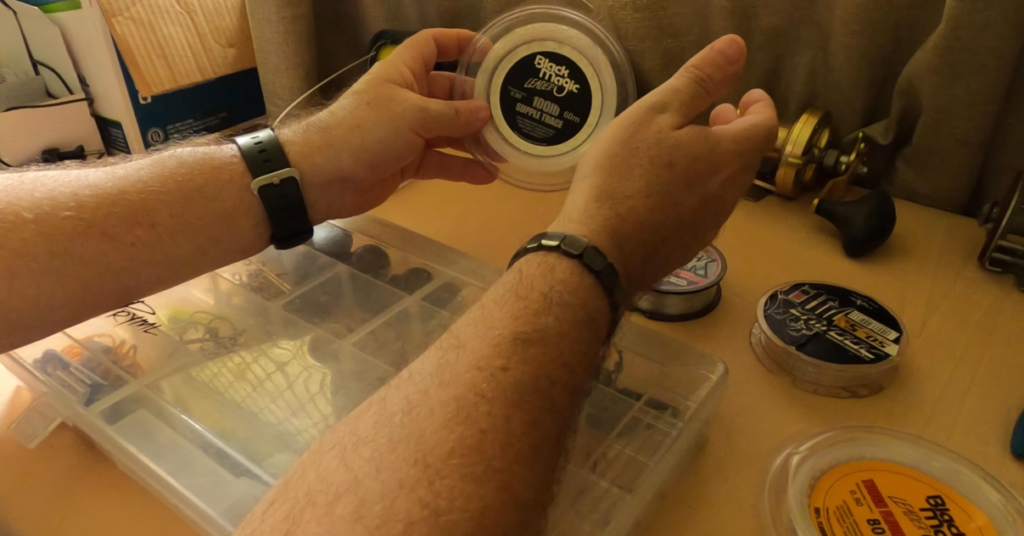
Tough Leader for Live Baiting and Bottom Fishing
A very stiff leader can interfere with the action of a smaller lure. Match the trace to the lure rather than automatically reaching for the heaviest line available.
For live baiting, bottom fishing and bait fishing close to structure, I normally choose a tougher trace. It has a harder outer coating and is generally more resistant to rubbing against reef.
Tough trace can be stiffer than supple line, especially in heavy breaking strains, but that trade-off may be worthwhile when a big fish immediately heads for coral.
The best fluorocarbon leader or mono leader is the one that balances bait movement with enough protection for the country you are fishing.
Brand Name Does Not Always Mean Better
Anglers often buy line because they recognise the brand or assume the highest price means the best performance. My experience has been different.
I have had some expensive leader let me down, while cheaper material has been reliable and strong.
Confidence matters, but it should come from your own testing. If a line repeatedly breaks, damages easily or gives poor knot strength, stop using it regardless of the label.
If an affordable product keeps landing fish around reef, there is no reason to replace it simply because another spool costs more.
The words fluorocarbon leader on a label cannot replace reliable knots and proven performance.
I currently prefer a reasonably priced, soft line with a tough outer coating for much of my offshore fishing. It is easy to work with, thin enough for its breaking strain and has not let me down.
My Final Verdict on Fluorocarbon Leader
My verdict is simple: do not assume fluorocarbon leader is essential for every fishing situation.
I believe it can help in shallow, clear water, particularly with lighter line and cautious fish. Offshore, in dirty water or around heavy reef, I would rather use a dependable leader with the right flexibility, diameter and abrasion resistance.
Spend according to the job. Use supple trace when lure movement is important. Use tough trace when fishing live baits or working close to structure.
Most importantly, test your knots and leader before trusting them to the fish of a lifetime.
What leader do you use? Do you notice more bites with fluorocarbon, or does normal mono work just as well for you? Share the brand, breaking strain and type of fishing you use it for so other anglers can compare real experiences.
More Fishing Guides & Resources
Want more practical fishing tips you can use straight away? Check out the latest Shannon’s Fishing PDF guides covering rigs, bait tricks, lure techniques, and proven methods for catching more fish around Australia.