
If you are new to lure fishing, choosing the best inshore fishing lures can get confusing fast. There are thousands of soft plastics, hard bodies, poppers, vibes and surface lures on the wall, and it is easy to waste money on gear you may never use.
The good news is you do not need a massive tackle box. You only need a small group of simple lures that work around flats, channels, rock walls, weed edges and river systems.
These are the best inshore fishing lures I would start with if you want easy fishing, good fun and a real chance of catching a feed.
Best Inshore Fishing Lures for Beginners
The best inshore fishing lures are the ones you can use in different areas and on different fish. A good beginner lure should catch flathead, whiting, bream, tailor, trevally, salmon, mangrove jack, barra or school jew depending on where you fish.
You do not need heavy gear for this style of fishing. A light graphite spin rod around the 3 to 4 kilo mark, a 2500 size reel, 6 to 10 pound braid and a sensible leader will cover most inshore lure fishing.
The rod tip matters too. When you twitch the rod, the lure needs to move. If the tip is too soft, the rod bends but the lure will not work properly.
1. Soft Plastics for Flathead
Soft plastics are one of the best inshore fishing lures for flathead. A five inch grub style plastic worked around sand flats, weed edges and shallow channels is simple and very effective.
Cast it out, let it sink near the bottom, then work it back with small lifts and pauses. Flathead sit on the edges waiting for food to come past, so keeping the lure close to the bottom is the key.
A quarter ounce jig head with around a 3/0 hook is a good starting point. Natural colours work well, but jig head colour can make a difference. Some days a green head gets bites, and other days a pink head works better.
2. Surface Lures for Whiting, Tailor and Trevally
Small surface stick baits and little poppers are some of the best inshore fishing lures when the fish are feeding up high. For whiting, clear stick baits with stripes can be deadly across shallow sand flats at high tide.
Do not work them too slowly. Whiting are aggressive and will chase a lure skipping across the surface. Cast over the flat, wind it back quickly and listen for the slurps behind it.
Small fish may miss, but the better whiting usually find the hooks. This is also a great way to get kids into fishing because they can see the strikes happen on top.
Little poppers are also great around rock walls, rivers, drains, bridge edges and structure. They can catch tailor, trevally, salmon and even mangrove jack, especially around low light or night time structure.
Cheap poppers can still catch fish, but always check the hooks and split rings before using them.
3. Vibes and Blades for Channels
Vibes are one of the best inshore fishing lures for fishing deeper channels from a boat or kayak. They are easy to use and catch a wide range of fish.
Drop the vibe to the bottom, lift the rod until you feel the lure vibrate, then let it fall again. You can also cast it out and hop it back along the bottom.
This works well for flathead, school jew, tailor, trevally and fish sitting along drop-offs.
Bigger vibes suit deeper water and stronger current. Smaller vibes and tiny metal blades are excellent for bream around pontoons, bridge pylons, fallen trees and canal edges.
4. Small Hard Bodies for Trolling Flats
Small diving hard bodies are great if you want simple fishing, especially with kids. You can slow troll them around sand flats, mud flats, weed beds and small channels at high tide.
You do not need to troll fast. In many cases, the boat only needs to be in gear and crawling with the current.
Put the lure a short distance behind the boat and let it swim. Flathead love these little lures, and big fish will eat them too.
Pink, silver and natural colours are all worth carrying. Some days colour matters, so a few options in the tackle box helps.
Visit Fishing Lures That Do the Job for the hard-bodied, surface and squid-style lures I recommend for particular situations.
5. Jerk Baits for Bigger Fish
Jerk baits and twitch baits are some of the best inshore fishing lures when you want to trigger bigger fish. These long, skinny lures with small bibs are excellent over shallow flats, around pontoons, beside bridge pylons and near structure.
The key is the pause. Rip the lure with sharp rod twitches, then stop it. Many fish hit while the lure is sitting still.
Look for suspending, slow sinking or slow floating models. Avoid fast floating lures for this style because they shoot back to the surface too quickly. You want the lure to stop in the strike zone.
Jerk baits can catch flathead, tailor, trevally, salmon, mangrove jack and barra depending on where you fish.
Final Thoughts on the Best Inshore Fishing Lures
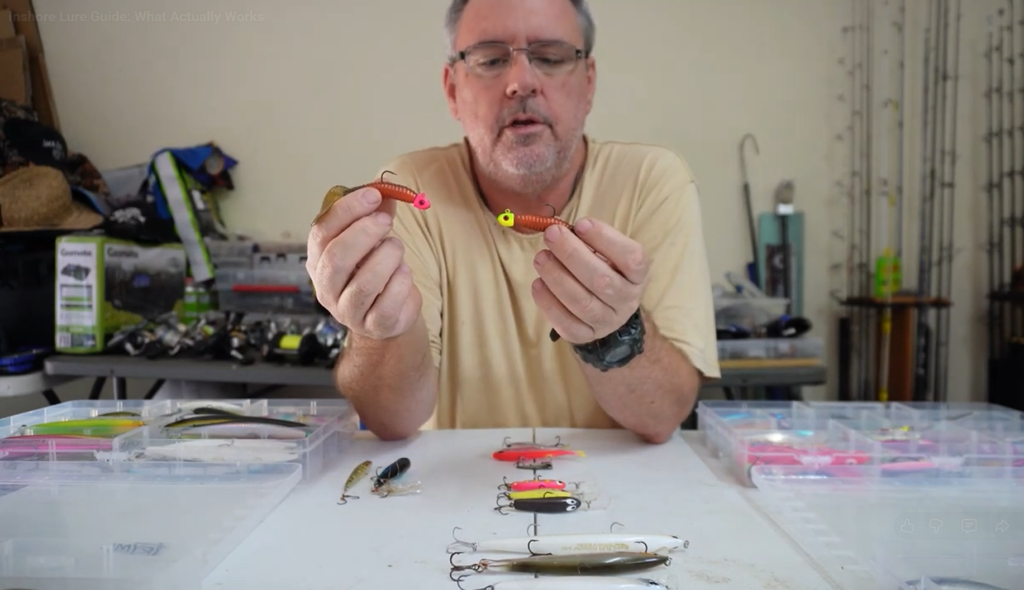
If I had to keep it simple, I would start with soft plastics, surface lures, vibes, small hard bodies and jerk baits. Those five styles cover flats, channels, rock walls, weed edges, pontoons and river systems.
The best inshore fishing lures are not always the most expensive ones. They are the lures you can use confidently, work properly and catch fish on again and again.
Once you learn these best inshore fishing lures, you will catch more fish without carrying a tackle shop in the boat.
Before you head out, check your local fishing rules, size limits and possession limits. For Queensland anglers, the Queensland Government recreational fishing rules page is a good place to start.
More Fishing Guides & Resources
Want more practical fishing tips you can use straight away? Check out the latest Shannon’s Fishing PDF guides covering rigs, bait tricks, lure techniques, and proven methods for catching more fish around Australia.
More Lure Talk
Cheap Fishing Lures vs Expensive Lures