
Mackerel trolling rigs are one of the best ways to target Spanish mackerel, spotted mackerel, school mackerel and other fast-moving pelagic fish around reefs, bait schools and current lines.
The problem is that a lot of fishos overcomplicate them.
You do not always need the fanciest lure, the most expensive trolling skirt or a boat full of gear. Sometimes a properly rigged dead bait or live bait will outfish everything else in the spread.
In this guide, we’ll break down several practical mackerel trolling rigs based on proven bait trolling methods used for pilchards, garfish, slimies, yakka, sauries and other baitfish. These rigs are especially useful when chasing mackerel around shallow reefs, offshore grounds and bait-holding structure.
Before fishing for mackerel, always check your local size and possession limits. In Queensland, Spanish mackerel rules include a 75cm minimum size on the east coast, with possession limits and closed seasons applying. You can check the latest official rules here: Queensland tidal water fishing limits.
Why Mackerel Trolling Rigs Work So Well
Mackerel trolling rigs work because they present a real baitfish naturally behind the boat.
Mackerel are built to hunt. They love wounded, flashing, struggling baitfish. A well-rigged pilchard, garfish, slimy mackerel or yakka gives off the right profile, smell and movement.
That is the big advantage over hard-body lures.
A lure can work brilliantly, but a bait looks, smells and feels real. When the fish are fussy, a properly presented bait can be the difference between a quiet day and a screaming reel.
The key is making sure the bait tracks straight.
If your bait spins, it looks wrong. It can also twist your line and ruin the presentation. A good trolling rig should keep the bait upright, straight and natural.
Live Bait Mackerel Trolling Rig
One of the simplest mackerel trolling rigs is the live bait wire rig.
This setup usually uses a small inline hook at the front and a trailing treble hook toward the back. The front hook goes through the nose of the live bait, while the treble trails naturally near the tail.
A small sinker can be added near the front to help keep the bait swimming properly.
The important part is using an inline front hook. Avoid offset hooks because they can act like a rudder and make the bait twist.
For live baits such as yakka, slimies or small fusiliers, this rig is excellent.
The front hook holds the bait in place, while the trailing treble sits back where a mackerel is likely to strike. You do not always need to pin the treble into the bait. In many cases, letting it trail is better because it keeps the bait healthier for longer.
Less damage means the live bait stays alive longer.
See my Mackerel Fishing Gear page for the tackle and lures I recommend for casting and trolling.
Pilchard Dead Bait Mackerel Trolling Rig
A pilchard rig is one of the classic mackerel trolling rigs for spotted mackerel and Spanish mackerel.
This setup usually uses ganged hooks with a small lead weight attached near the front hook. That lead acts like a keel and helps the bait track straight.
The hooks need to be straight inline hooks.
Do not use offset ganged hooks for this style of rig because they can cause the pilchard to roll or spin.
A pilchard will not swim like a live bait. Instead, it should track straight through the water with a natural baitfish profile. Once rigged, drop it beside the boat while moving slowly and watch how it behaves.
If it spins, fix it.
If it tracks straight, send it back behind the boat.
This is a great option around shallow reefs, bait schools and areas where spotted mackerel are feeding.
Big Garfish Mackerel Trolling Rig
Garfish are deadly trolling baits.
For bigger mackerel trolling rigs, a garfish can be rigged on larger ganged hooks with a nose cone and extra lead if needed.
The bigger the bait, the more important balance becomes.
A small bait might only need one small lead weight. A larger garfish, saury, tailor or bonito strip-style bait may need two or even three weights to stop it from rolling.
Before rigging a garfish, soften the body slightly.
Run your fingers along the belly to loosen it up and remove any gunk from inside. This helps the bait move better in the water. A properly rigged garfish will often have a nice tail kick when trolled slowly.
That kicking action is exactly what attracts big Spanish mackerel.
Nose Cone Dead Bait Rig
The nose cone setup is one of the most useful mackerel trolling rigs for dead baits.
A nose cone slides down over the front of the bait and helps hold everything together. It also keeps the bait’s head neat and streamlined.
There are different nose cone shapes.
Long, skinny nose cones suit long baits like garfish and sauries.
Shorter, fatter nose cones suit deeper-bodied baits like slimies, yakka, tailor and small tuna.
This matters.
Using the wrong nose cone can make the bait sit poorly, which can cause it to spin. When the nose cone matches the bait, the rig swims cleaner and looks more natural.
This is one of those small details that separates a good trolling bait from a useless spinning mess.
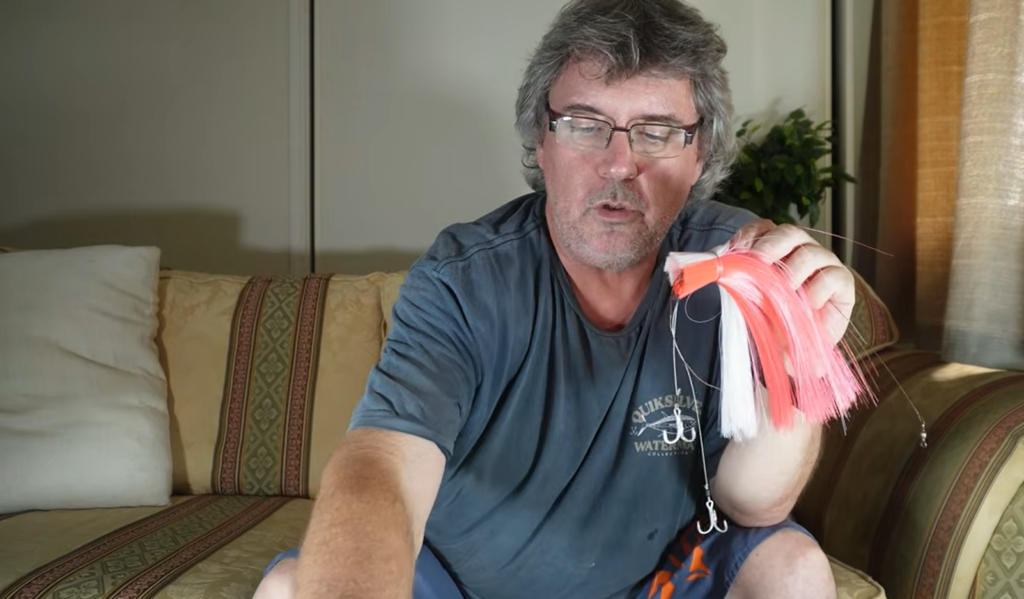
Wog Head Mackerel Trolling Rig
A wog head rig is one of the easiest and most effective mackerel trolling rigs for garfish and sauries.
Instead of using a complicated nose cone and ganged hook setup, you can run a witch head in front of the bait with a short wire trace and trailing trebles.
The bait is held in place with soft rigging wire.
Put the wire through the eye of the bait, wrap it around the head a few times, then slide the bait’s nose into the wog head.
As the boat moves forward, the skirt or feathers fold back over the bait. The trebles trail underneath, and the garfish kicks along naturally behind the boat.
This rig is simple, fast and very effective.
It is especially useful when you want to get a bait back in the water quickly after a bite-off or missed strike.
Common Mistakes With Mackerel Trolling Rigs
The biggest mistake with mackerel trolling rigs is letting the bait spin.
A spinning bait will not look natural. It can scare fish off, twist your leader and make the rig useless.
The second mistake is using the wrong hooks.
Inline hooks are important for bait trolling. Offset hooks can cause the bait to pull sideways.
The third mistake is not using enough lead.
Lead is not just there to add weight. It acts like a keel. It helps the bait stay upright and track properly.
The fourth mistake is choosing the wrong nose cone.
Match long skinny cones to long skinny baits, and short fat cones to deeper-bodied baits.
The fifth mistake is over-rigging live bait.
With live bait, keep it simple. The less damage you do, the longer it will live and swim naturally.
Final Tips For Better Mackerel Trolling Rigs
The best mackerel trolling rigs are not always the flashiest.
They are the ones that swim straight.
Before sending any bait back behind the boat, test it beside the boat first. Put the boat in gear, hold the rig beside you and watch the bait.
If it tracks straight, it is ready.
If it spins, adjust the hooks, nose cone or lead until it runs properly.
For small mackerel and spotted mackerel, slow-trolled pilchards can be deadly.
For bigger Spanish mackerel, garfish, sauries, slimies and live baits are excellent options.
You can dress the rigs up with small squid skirts, tinsel skirts, witch heads or feathered heads, but the bait still has to swim properly. Decoration helps, but presentation catches fish.
Get that part right and these rigs will catch mackerel.
More Aussie Fishing Guides & Resources
Looking for more practical fishing tips? I’ve put together a growing collection of Shannons Fishing resources, including downloadable PDF guides, cheat sheets, rigs, bait tips, and step-by-step fishing advice made for Aussie fishos.
More Mackerel Fishing Guides
Mackerel Fishing Rigs and Lures