
Mackerel bait rigs are a great option when you want to move away from just trolling lures and start using dead baits, live baits, garfish, pilchards, slimies, yakka and other natural baits.
Lures are easy. You clip them on, troll around and hope for the best.
But if you want a more natural presentation, especially when Spanish mackerel, spotted mackerel or school mackerel are feeding on bait, properly rigged bait can be deadly.
The key is not making the rig too complicated.
A good mackerel rig needs to do three things.
It needs to hold the bait properly.
It needs to track straight.
And it needs to put hooks where the mackerel is likely to strike.
This guide breaks down some old-school mackerel bait rigs that still work extremely well today, including dead bait rigs, garfish rigs, wog head rigs and live bait rigs. These setups are based on practical rigging methods shown in the transcript, including ganged hooks, nose cones, net leads, wire traces and live bait trolling rigs.
Before chasing mackerel, always check your local fishing rules. For Queensland fishos, the official government fishing rules are available here: Queensland recreational fishing rules. The Queensland Government also recommends checking current size and possession limits and using the Qld Fishing 2.0 app for the latest rules.
Why Mackerel Bait Rigs Still Work
Mackerel bait rigs work because they give the fish something real.
A properly rigged garfish, pilchard, slimy or yakka looks natural in the water. It gives off smell, flash and movement that a hard-body lure cannot fully copy.
When mackerel are hunting around bait balls, shallow reefs or current lines, a bait swimming just outside the school can look like an easy meal.
That is exactly what you want.
The biggest mistake is letting the bait spin.
If your bait spins, it looks wrong. It also twists your line and ruins the presentation. Every bait should be tested beside the boat before you send it back.
If it swims straight, send it out.
If it spins, fix it first.
Old-School Dead Bait Mackerel Bait Rigs
One of the best mackerel bait rigs is the classic dead bait rig with ganged hooks.
This rig uses straight inline hooks, a small net lead on the front hook, a wire trace, a nose cone and usually a small squid skirt or witch head over the front.
The net lead is important.
It acts like a keel and helps keep the bait upright. Without enough lead, the bait may roll or spin.
For garfish, one lead may be enough. For bigger baits like tailor, small tuna or bonito, you may need two or three leads to keep the bait swimming properly.
You can adjust this rig to suit different baits.
Use smaller hooks and fewer hooks for pilchards.
Use bigger hooks and more lead for larger baits.
Use longer ganged hooks for garfish.
This is what makes the rig so useful. You can build the same basic system in different sizes depending on what bait you want to troll.
Garfish Mackerel Bait Rigs
Garfish are one of the best natural baits for Spanish mackerel.
A good garfish rig usually uses three or four inline ganged hooks, a nose cone, a wire trace and a skirt or wog head over the front.
The hooks must be straight.
Offset hooks can make the bait pull sideways and twist.
When rigged properly, a garfish can kick naturally behind the boat. That little tail kick is what makes it look alive, even when it is a dead bait.
For bigger garfish, do not be afraid to add more lead.
A big fat gar may need two net leads instead of one. The goal is not just weight. The goal is balance.
A balanced bait swims straight.
A badly balanced bait spins.
That one difference can decide whether your mackerel bait rigs get eaten or ignored
See my Mackerel Fishing Gear page for the tackle and lures I recommend for casting and trolling.
Pilchard Rigs For Spotted And School Mackerel
Pilchards are excellent for spotted mackerel, school mackerel and smaller Spanish mackerel.
For pilchards, use a smaller version of the dead bait rig.
You may only need two or three smaller ganged hooks and a light lead on the front. The pilchard does not need to kick like a garfish. It just needs to track straight through the water.
This is a great rig to troll around shallow reefs, bait schools and areas where small mackerel are feeding.
The trick is speed.
These mackerel bait rigs are not designed to be dragged fast like a lure. They are slow-trolled. In many cases, the boat only needs to be just in gear.
Slow and straight beats fast and spinning every time.
Wog Head Mackerel Bait Rigs
A wog head is a simple way to dress up a bait and make the front of the rig look cleaner.
You can run a wog head over a nose cone rig, or you can use a simpler witch head setup with trailing hooks.
The wog head slides over the front of the bait. As you troll, the feathers or skirt fold back over the bait and add extra flash and movement.
This works especially well with garfish and sauries.
You can use pink, orange, tinsel or other colours. Mackerel are not always fussy about the colour, but the skirt helps cover the nose cone and front of the bait.
That gives the whole rig a cleaner look.
A wog head does not fix a badly rigged bait, though.
The bait still has to swim straight.
Live Bait Mackerel Bait Rigs
Live bait rigs are simple and deadly.
A good live bait rig uses a small inline hook at the front, a trailing treble hook at the back, a small sinker near the nose and a wire trace.
The small front hook goes through the nose of the live bait.
The trailing treble sits back near the tail as the bait swims.
You do not always need to pin the treble into the fish. In many cases, the treble will trail naturally beside or underneath the bait as it swims behind the boat.
This keeps the bait healthier for longer.
Live yakka, slimies and legal-size tailor can all work well.
For mackerel bait rigs, live bait is one of the best options when fish are feeding deeper or sitting around bait schools.
Keeping the bait healthy and presenting it naturally are just as important as building the rig. For more help with bait care, hook placement and presentation, read my complete live bait fishing guide.
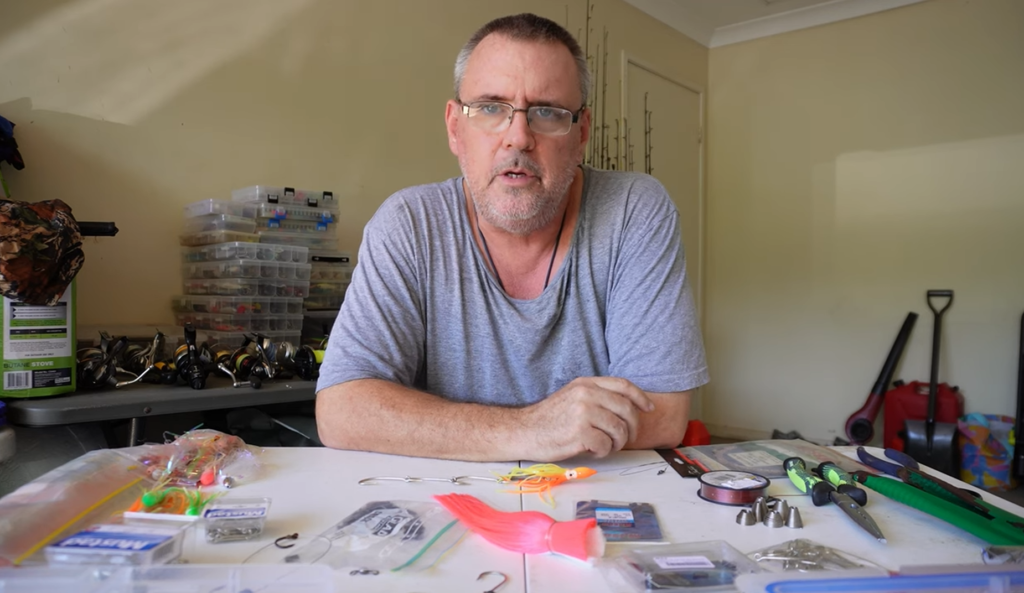
How To Troll Mackerel Bait Rigs Around Bait Balls
When trolling mackerel bait rigs, bait balls are one of the best things to look for.
Use your sounder to find bait.
If the bait is near the surface, troll around it.
If the bait is deeper, you can either use a downrigger or let your baits sink for a short time before putting the boat back into gear.
Be careful here.
If you let your rigs sink too far, they can hit the reef or bottom and snag up.
A good method is to drive near the bait ball, pull the boat out of gear for a short moment, let the baits sink, then drive away again. The baits rise back up through the water and can pass near the bait school.
That is often when the strike comes.
Another important tip is not to drive straight through the bait ball.
Go around it.
Keep your bait on the outside where it looks like an easy target. Predators often pick off the weak or separated baitfish around the edges.
That is where your bait should be.
Final Tips For Better Mackerel Bait Rigs
The best mackerel bait rigs are simple, strong and balanced.
Use wire because mackerel have sharp teeth.
Use inline hooks because they help baits track straight.
Use enough lead to keep the bait upright.
Match your nose cone to the bait shape.
Use a long skinny nose cone for garfish and sauries.
Use a shorter, fatter nose cone for slimies, yakka, tailor and small tuna.
Always test the bait beside the boat before sending it back.
If it swims straight, you are in the game.
If it spins, fix it.
Mackerel fishing does not need to be complicated. A well-rigged bait, trolled slowly around the right area, can be one of the most effective ways to catch Spanish, spotted and school mackerel.
More Aussie Fishing Guides & Resources
Looking for more practical fishing tips? I’ve put together a growing collection of Shannons Fishing resources, including downloadable PDF guides, cheat sheets, rigs, bait tips, and step-by-step fishing advice made for Aussie fishos.