
Spanish mackerel fishing is not particularly difficult when the fish are there and you get the important details right. Unfortunately, many anglers repeatedly make the same simple mistakes. They troll at the wrong speed, use lures that are nowhere near the fish, run too much wire or send out baits that are spinning instead of swimming.
You might even see Spanish mackerel sitting around a bait school on your sounder without getting a single strike. That does not always mean the fish are refusing to feed. It can mean your lure or bait is passing several metres above or below them.
Successful Spanish mackerel fishing is about putting a natural-looking bait or lure in front of the fish. Here are eight common mistakes that could be costing you mackerel.
1. Trolling at the Wrong Speed
The correct trolling speed depends on what you have behind the boat.
High-speed metal lures and weighted trolling heads can usually be run at approximately 10 to 12 knots. These are useful when covering distance between fishing grounds and can catch both tuna and Spanish mackerel.
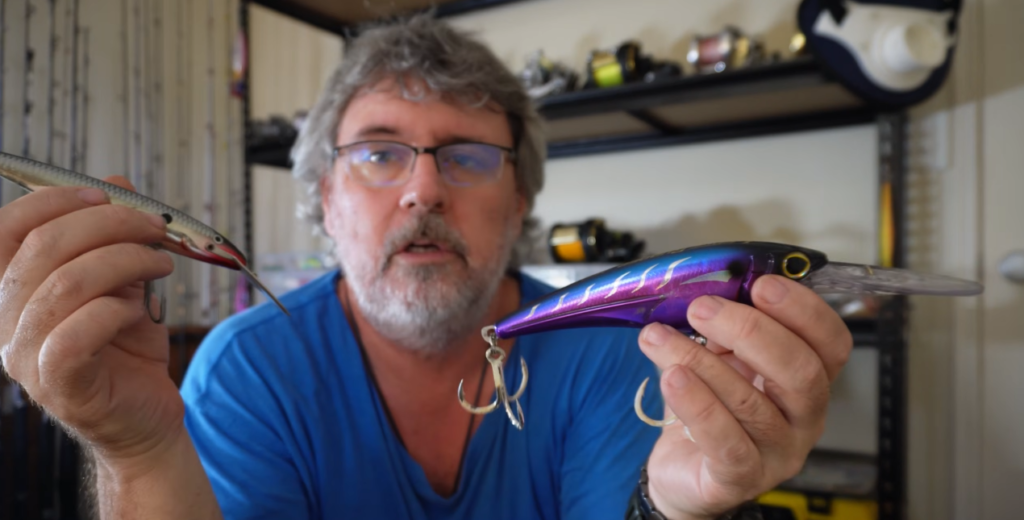
Most bibbed hardbody lures are better at around six to seven knots. I generally prefer seven knots because it gives many hardbodies a stronger kicking action. However, every lure is different. Shallow-running lures with small or cut-down bibs may need to be trolled more slowly.
Live and dead baits require an entirely different approach. Put the boat in gear and move slowly—often at around one knot. Going too fast can make a poorly rigged bait spin through the water.
Matching your speed to your lure or bait is one of the most important Spanish mackerel fishing basics.
2. Trolling at the Wrong Depth
Many anglers troll over fish without ever placing a lure in the strike zone.
A good starting spread is two shallow-diving lures and two deeper divers. When fishing alone, run one shallow and one deep lure. This covers two sections of the water column while you watch the sounder.
If the bait and mackerel are holding deep, running a lure that only dives one or two metres is unlikely to produce many strikes. Change to a deeper-diving lure or use a downrigger to place a live or dead bait closer to the depth where the activity is showing.
When bait is being attacked on the surface, switch to shallow-running lures. Troll around the outside of the school instead of driving directly through it and scattering the bait.
In Spanish mackerel fishing, the lure that reaches the fish usually beats the lure with the most attractive colour.
See my Mackerel Fishing Gear page for the tackle and lures I recommend for casting and trolling.
3. Running Too Much Wire
For Spanish mackerel fishing with hardbody lures, I generally prefer not to use wire. Spanish mackerel usually attack the rear of a lure, and removing a long wire trace can give the lure a more natural presentation.
Yes, occasionally a lure will be bitten off. That is part of fishing. However, the additional strikes you receive without a long length of wire may make the risk worthwhile.
If you are worried about losing an expensive lure, use a short bite trace. Attach it to a small but powerful swivel that will not create a large bubble trail or interfere with the lure’s action.
I use a short wire bite trace when trolling smaller dead baits such as garfish. With long gang-hook rigs for wolf herring, the hooks already protect most of the bait, so I do not add a long wire leader in front of the rig.
Use the shortest practical amount of wire instead of automatically adding several feet.
4. Sending Out Baits That Spin
Bait presentation can make or break your Spanish mackerel fishing session.
Before sending a live or dead bait behind the boat, lower it beside the boat and watch how it behaves. A live bait should kick naturally and track straight. A properly rigged garfish should have a subtle tail kick, while a pilchard should track straight without spinning.
If the bait rolls, spins or pulls sharply to one side, bring it back and rig it again. Do not send out an unnatural bait simply because you cannot be bothered fixing it.
The same rule applies whether you are trolling the bait near the surface or attaching it to a downrigger. Test every bait beside the boat before putting it into the fishing spread.
That thirty-second inspection is one of the easiest Spanish mackerel fishing rules to follow—and one of the most commonly ignored.
5. Trolling Where There Is No Bait
Good Spanish mackerel fishing usually begins with finding bait.
Some anglers leave the river, harbour or boat ramp, put their lures out immediately and begin trolling through empty water. They might get lucky, but it is not the most reliable approach.
Look for reefs, contour changes, wrecks and other ground that regularly holds bait. Watch for bait schools on the sounder, surface activity and birds circling above the water. High-flying birds can indicate that predators are pushing bait upwards even when nothing is visibly breaking the surface.
If I am using baits, I normally wait until I have found suitable ground or bait before putting them out. When trolling lures, I travel to an area where mackerel and bait commonly gather, then begin working the area.
The most productive Spanish mackerel fishing normally happens around life—not in the middle of empty water.
6. Putting the Hooks in the Wrong Place
Spanish mackerel commonly attack the back half of a bait. If you are getting baits back with their tails cleanly chopped off, you have probably found mackerel, but your rear hook is in the wrong position—or is missing entirely.
When trolling live bait, the front hook or attachment point is normally placed near the nose so the bait can be towed correctly. A second hook, often a treble, should be positioned farther back near the tail.
When rigging dead garfish on gang hooks, make sure the last hook finishes close enough to the tail to connect with a short-striking fish.
This is one of the most frustrating Spanish mackerel fishing mistakes because you can find the fish, attract the bite and still miss the hookup.
7. Refusing to Change When Fish Won’t Bite
Spanish mackerel fishing can be frustrating when you see fish around bait on the sounder but cannot trigger a strike.
Do not continue trolling the same lure at the same depth for several hours. Change something.
Try a different lure colour, size or swimming depth. Swap a live bait for a dead bait, change the bait species or move the downrigger higher or lower. Sometimes a small change is enough to trigger the first bite.
Another useful option is casting a heavy metal lure, such as an 80-gram metal slug. Let it sink below the fish and then retrieve it quickly through the water column. The fast-moving lure can trigger a reaction bite from mackerel that have ignored trolled offerings.
Give the fish several different options before deciding they are not feeding.
8. Using Gear That Is Too Heavy
For most Spanish mackerel fishing along the east coast, you do not need extremely heavy tackle.
A TLD 15, Speedmaster or similar overhead reel loaded with approximately 10-kilogram line will handle many average-sized mackerel. Modern 4000- to 5000-size spinning reels can also land surprisingly large fish when matched with a suitable rod and a correctly set drag.
A larger reel such as a TLD 30 becomes more useful when deliberately targeting 30-kilogram-plus Spanish mackerel in tropical waters or when you need to land fish quickly because sharks are a problem.
Match the tackle to the expected fish and conditions. Using lighter, balanced gear makes the fight more enjoyable while still giving you enough power to land the fish.
Spanish Mackerel Fishing Checklist
Before you begin trolling, quickly check the following:
- Match your trolling speed to the lure or bait.
- Run shallow and deep presentations until you locate the fish.
- Watch the sounder and adjust your lure or bait depth.
- Avoid driving directly through surface bait schools.
- Use no wire or only a short bite trace when practical.
- Test every bait beside the boat before sending it out.
- Find bait, structure or visible activity before trolling.
- Position a hook near the tail of live and dead baits.
- Change lure colour, depth, size or bait when fish will not bite.
- Use tackle that matches the size of mackerel you are targeting.
Spanish mackerel fishing becomes much easier once your speed, depth and bait presentation are correct. Find the bait, put a natural-looking lure or bait at the same depth and be prepared to change your approach when the fish do not respond.
Fishing limits and closed seasons can change, so always check the current Queensland recreational fishing rules before heading offshore.
For more practical fishing advice and downloadable guides, visit the Shannons Fishing Resources page.
More Fishing Guides & Resources
Want more practical fishing tips you can use straight away? Check out the latest Shannon’s Fishing PDF guides covering rigs, bait tricks, lure techniques, and proven methods for catching more fish around Australia.