
Are cheap fishing lures actually worth using, or are they just junk that catches fishermen instead of fish?
It is a fair question, because some lures now cost anywhere from $20 to $40, and some specialty lures can push way past that. When you are casting around reefs, rocks, timber, mangroves, and bommies, losing a $40 lure hurts. Lose a few in one session and suddenly your “quick fish” has turned into a very expensive day.
But here is the honest truth from someone who has used both sides of the tackle box for years: cheap fishing lures can absolutely catch fish, but they are not always perfect straight out of the packet.
Expensive lures have their place. Cheap lures have their place too. The smart fisho knows when to use each one.
Cheap Fishing Lures Can Catch Plenty of Fish
A lot of anglers look down on cheap fishing lures because they are often bulk-made, no-name, or sold through bargain bins and online stores. But that does not automatically mean they are useless.
Some cheap fishing lures are absolute weapons.
I have used tiny shallow-running jerkbaits that cost around a couple of dollars each, and they have caught flathead, tailor, small jewfish, little GTs, queenfish, and plenty of other fish around flats, rocks, and northern waters.
That is the part a lot of people miss.
Fish do not know how much your lure cost. They react to action, profile, colour, vibration, depth, and how you work it. If a cheap lure swims well and matches the bait, it can get smashed just like a brand-name lure.
The Big Problem With Cheap Fishing Lures
The main problem with cheap fishing lures is consistency.
Some swim perfectly. Some are terrible.
You might buy ten cheap lures and find three that swim beautifully, four that are average, and three that spin on the surface like a busted propeller. That is the gamble.
The bib might be slightly off. The tow point might need tuning. The body might not sit right in the water. Sometimes they swim fine at first, then after a couple of fish they start tracking sideways or rolling over.
That is where expensive lures usually have the advantage. Most quality brand-name lures are tank-tested, tuned properly, and designed to swim straight out of the box.
Visit Fishing Lures That Do the Job for the hard-bodied, surface and squid-style lures I recommend for particular situations.
Why Expensive Fishing Lures Are Not Always a Scam
Some fishos reckon expensive lures are a rip-off. I do not fully agree with that.
Good expensive fishing lures usually have better finish, better action, better balance, stronger bodies, and more reliable swimming. Brands like Nomad, Duo, Jackall, Rapala, Halco, and others have spent a lot of time getting their lure actions right.
When the water is clear, the fish are fussy, or the bite is hard, that can matter.
A high-end lure with a better colour pattern, more natural action, and perfect swimming depth can be the difference between getting follows and getting bites.
So no, expensive fishing lures are not always a scam.
But does that mean you need to throw $40 lures everywhere?
No chance.
When Cheap Fishing Lures Are the Better Choice
Cheap fishing lures are perfect when you are fishing rough country.
If you are casting around shallow reefs, bommies, rocks, snags, mangroves, or reef edges, there is a good chance you are going to lose gear. That is exactly where cheap lures shine.
You can throw them into nasty country without worrying too much. If you get smoked, bricked, snagged, or busted off, it is not the end of the world.
That gives you confidence to cast tighter to structure.
And let’s be honest, the fish are often sitting right in that danger zone. If you are too scared to cast your expensive lure where the fish live, that lure is not helping you much.
Upgrade the Hooks and Split Rings on Cheap Fishing Lures
One thing I would strongly recommend with cheap fishing lures is upgrading the hardware.
A lot of cheap lures come with weak hooks and poor split rings. The body might be good. The lure might swim well. But the hooks and rings can let the whole thing down.
Change the hooks. Change the split rings. Then you might have a very good lure for a fraction of the price.
That said, this does not only apply to cheap fishing lures. Some expensive lures also come with hooks that are too light for serious Aussie fishing, especially if you are chasing hard-pulling reef fish, mackerel, trevally, queenfish, or anything with power.
Always match your hooks and split rings to the fish you are chasing.
Also, check your local fishing gear rules when running multiple hooks, assist hooks, trebles, or bait jigs. For Queensland anglers, the official fishing gear rules are listed here: Queensland Government fishing gear rules.
Cheap Fishing Jigs Can Be Brilliant Around Reefs
Jigs are one area where cheap gear can really make sense.
When you are fishing reef country, you are going to lose jigs. That is just part of it. Big fish brick you. Jigs get stuck. Line rubs on coral. It happens.
Buying expensive jigs can get painful fast, especially when some of them cost $20, $30, or even $40 each.
Cheap metal jigs bought in bulk can be deadly. Some of them have decent hooks, good flash, and enough action to catch plenty of reef fish. If you lose one, you tie another on and keep fishing.
That is the key.
Cheap jigs let you fish harder without worrying about every drop costing you money.
When Expensive Lures Catch More Fish
There are definitely times when expensive lures have the edge.
When fishing is tough, the better action and finish can help. When fish are following but not eating, a more realistic colour or cleaner swimming lure might trigger the bite.
Expensive lures also tend to be more reliable when trolling. They usually track straighter, hold depth better, and keep swimming after multiple fish.
That matters when you are trolling for mackerel, tuna, wahoo, or other fast fish. If a lure keeps blowing out or rolling, it is wasting time in the water.
So yes, expensive lures can catch more fish in certain situations.
But they are not magic.
You still need to put them in the right place, at the right depth, with the right retrieve.
The Best Tackle Box Has Both Cheap and Expensive Lures
For me, the best answer is simple: carry both.
Have cheap fishing lures for rough ground, shallow reefs, rocks, snags, and days when fish are eating anything.
Have better brand-name lures for harder fishing, clear water, trolling, fussy fish, or when you need a lure you know will swim properly straight away.
That is the smart way to build a tackle box.
You do not need to be a tackle snob. You also do not need to buy the cheapest thing you can find and expect every lure to be perfect.
Use the right lure for the right job.
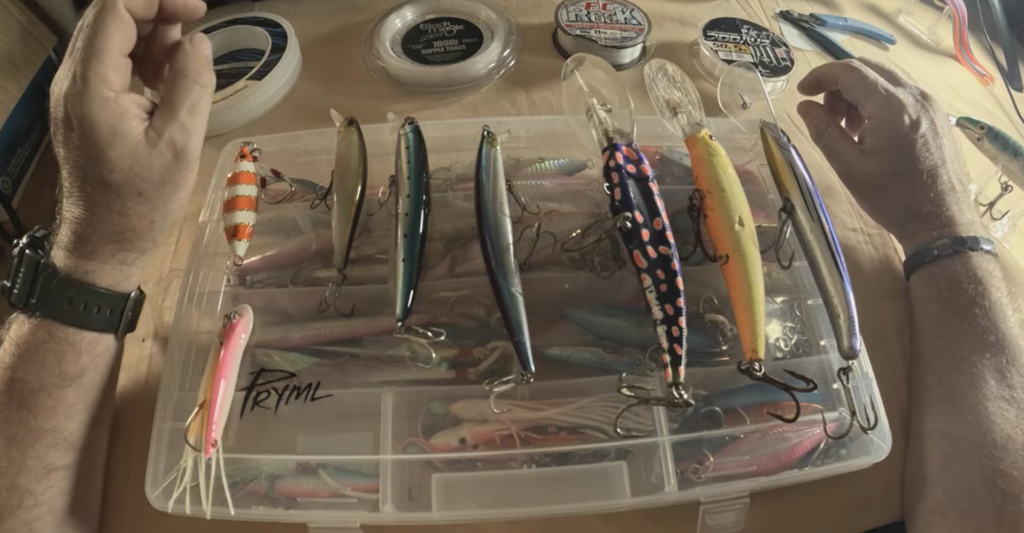
Final Verdict: Are Cheap Fishing Lures Worth It?
Yes, cheap fishing lures are worth it.
But you need to be realistic.
Some will be great. Some will be rubbish. Some will need tuning. Most will need better hooks and split rings.
Expensive lures are not a scam either. A good brand-name lure can swim better, last longer, and catch fish when cheaper lures are not getting the bite.
The real answer is not cheap vs expensive.
The real answer is knowing when to use each one.
If you are casting into nasty country, throw the cheaper gear and fish with confidence. If the fish are shut down or you need something that swims perfectly every time, that is when the expensive lure earns its place.
At the end of the day, the best lure is the one you are willing to cast where the fish actually live.
What Do You Use?
Do you run mostly cheap fishing lures, expensive brand-name lures, or a mixture of both?
Some fishos love the bargain bins. Some only trust the big brands. Most serious anglers probably have a bit of everything in the tackle box.
There is no perfect answer.
If it swims right, holds together, and catches fish, it has earned its spot.
More Fishing Guides & Resources
Want more practical fishing tips you can use straight away? Check out the latest Shannon’s Fishing PDF guides covering rigs, bait tricks, lure techniques, and proven methods for catching more fish around Australia.