
The Rapala CD trolling lure is one of those old-school lures that has earned its place in a lot of offshore tackle boxes.
Over the years, I have used a lot of different trolling lures. Skirts, hardbodies, deep divers, high-speed lures, metal heads, bibbed minnows and plenty of flash new designs. Some are good, some are overhyped, and some catch more fishos than fish.
But if we are talking about a proper proven offshore hardbody, the Rapala CD trolling lure is still one of my all-time favourites.
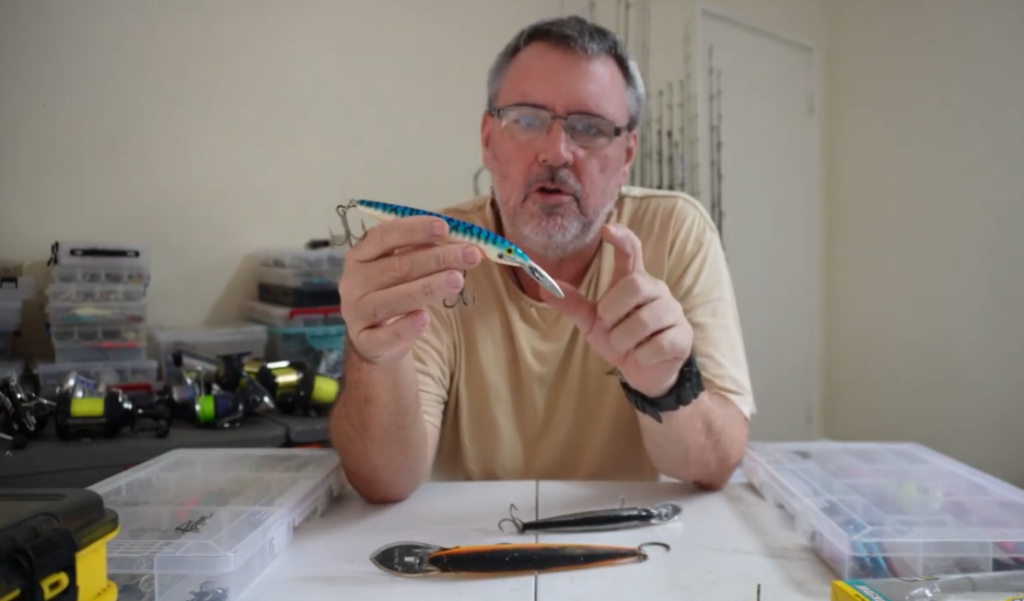
The one I am holding here is a Rapala CD11. I have also got a CD14, and both sizes have caught plenty of fish over the years. These lures are getting harder to find now, and when you do find them, they are not cheap anymore. But they are still absolutely worth having if you troll offshore for mackerel, tuna and other pelagics.
Rapala has been making fishing lures since 1936, and Rapala Australia says its lures are still hand-tuned and tank-tested before packaging to make sure they have the Rapala swimming action straight out of the box. That is exactly the sort of detail that made these lures famous in the first place. You can see more lures at Rapala Australia.
Why the Rapala CD Trolling Lure Is Still Worth Using
The biggest reason the Rapala CD trolling lure still works is simple.
It swims properly.
Some lures look good in the packet but do not track well, blow out at speed or need constant tuning. The old Rapala CDs have always had that tight, reliable swimming action that fish eat.
They are not the newest lure on the wall. They are not the deepest diving lure. They are not covered in crazy marketing hype.
But they catch fish.
That is what matters.
These lures were getting used offshore years before many of the modern lures became popular. Back then, we were trolling Rapala CDs before we even knew much about some of the other lure brands that are common now.
And honestly, I would still put a Rapala CD up against a lot of modern hardbody trolling lures.
Visit Fishing Lures That Do the Job for the hard-bodied, surface and squid-style lures I recommend for particular situations.
Best Rapala CD Sizes for Offshore Trolling
The Rapala CD trolling lure came in a range of sizes.
The smaller sizes, like the little CD models, were excellent in rivers. They could be trolled for flathead and other estuary fish, and they were deadly little lures.
But for offshore fishing, I like the bigger models.
The CD11 and CD14 are the two I would be looking at for mackerel and tuna. The CD11 is a nice middle size, while the CD14 gives you a bigger profile and a bit more presence in the water.
For Spanish mackerel, I like the larger models.
For spotted mackerel, smaller models can work very well.
For tuna, both the 11s and 14s have a place, especially if the fish are feeding on bait around that size.
That is one of the reasons these lures are so useful. You can match the size to the bait and the fish you are chasing.
Why Mackerel Love Rapala CD Lures
Mackerel love a Rapala CD trolling lure.
Spanish mackerel especially seem to have a real liking for them. The lure has the right flash, the right vibration, and the right baitfish profile.
When there is a bit of sun around, the stainless-style bib throws flash through the water. That little bit of reflection can make a big difference when you are trolling in blue water.
The lure dives down around a couple of metres, swims hard, and looks like something a mackerel should eat.
That is why these lures have caught so many Spanish mackerel over the years.
If I was specifically trolling them for mackerel now, I would run a short wire bite trace. I know plenty of anglers prefer straight mono or fluorocarbon because it can get more bites, but these lures are getting harder to find and expensive.
I would rather lose a tiny bit of stealth than get bitten off by a big Spanish mackerel.
Best Wire Trace for Rapala CD Mackerel Fishing
For mackerel fishing with a Rapala CD trolling lure, I would use a short bite trace.
You do not need a huge length of wire. Just enough to protect the lure from the teeth.
Something around half a foot long is enough in many situations. Use 40lb to 60lb single strand wire or piano wire, depending on the size of the mackerel in your area.
Join it properly with haywire twists, then use a small but strong snap swivel so you can connect the lure neatly.
The goal is not to make a massive heavy trace that kills the lure’s action. The goal is just to stop a mackerel cutting you off at the lure.
Because once a mackerel eats the front of that lure, mono does not last long.
And with these Rapala CDs getting harder to replace, I would not be taking silly risks.
Rapala CD Trolling Speed
One of the best things about the Rapala CD trolling lure is that you can troll it at a decent pace.
I like them around 6 to 8 knots.
At that speed, the lure digs in, swims well and covers water. It is fast enough to suit mackerel and tuna, but not so fast that the lure loses control.
These are not super deep divers. That is probably their only real downside. They generally dive to around the top couple of metres, depending on line, speed, size and conditions.
But for surface-feeding pelagics, that is not always a bad thing.
Mackerel, tuna and other offshore predators often feed high in the water column. If the bait is up, you do not always need a lure digging down 8 or 10 metres.
Sometimes a good swimming lure running a couple of metres down is exactly what you want.
Rapala CD Lures for Tuna
The Rapala CD trolling lure is not just a mackerel lure.
Tuna like them too.
Years ago, when we would head wide near the shelf looking for yellowfin, we used to put out a pattern of Rapala CD14s and troll along the edge. They were a very good lure for finding yellowfin tuna.
That makes sense.
Tuna respond well to fast-moving, tight-swimming lures that look like baitfish. A Rapala CD has that wounded baitfish swimming action that tuna notice.
If you are fishing down south for southern bluefin tuna, you could run them on heavy mono leader instead of wire. A couple of feet to a couple of metres of around 150lb leader would be a good starting point, depending on your setup.
Crimp it properly, use chafe tube where needed, and make sure everything is strong.
For tuna, clean rigging matters.
Trebles vs Singles on Rapala CD Lures
One question worth testing is whether to run trebles or singles on a Rapala CD trolling lure.
The standard trebles work. They have caught plenty of fish over the years.
But I have also tried singles on some of these lures. Singles can make sense if you are chasing bigger fish, want easier releases, or want stronger hooks.
The main thing is making sure the lure still swims correctly.
When you change hooks, you change weight and balance. If you put the wrong singles on, the lure might not track the same way. It might roll, lose action or sit differently in the water.
So if you change from trebles to singles, test the lure beside the boat before properly fishing it.
If it swims clean, you are good.
If it starts acting strange, change the hooks again.
Why These Old-School Lures Are Getting Harder to Find
One of the frustrating things about the Rapala CD trolling lure is that they seem harder and harder to find now.
You can still see Rapala lures around, but the specific older CD models and favourite colours are not always easy to get. And when you do find them, they can be expensive.
That is why I would look after them.
If you have old Rapala CDs sitting in the tackle box, do not write them off. Even if the paint is scratched, faded or half gone, they can still catch fish.
One of mine lost most of its original colour from catching fish, so I repainted it. It is not a proper factory colour anymore, but it was based on a colour that was absolutely slaying Spanish mackerel down the Gold Coast years ago.
It has still caught fish.
That is the thing with proven lures. They do not need to be pretty. They just need to swim right.
Final Thoughts on the Rapala CD Trolling Lure
The Rapala CD trolling lure is one of those lures I would still happily run offshore today.
It is old-school, but it still works.
The CD11 and CD14 are both excellent sizes for mackerel, tuna and general offshore trolling. The smaller sizes are still worth using in rivers and estuaries for flathead and other species.
They troll well around 6 to 8 knots, have a great swimming action, throw good flash in the sun, and catch fish.
The only real downside is that they do not dive super deep, and they are getting harder to find.
But if you see one in a tackle shop and you have a few spare dollars, grab it.
Especially if you chase Spanish mackerel, spotted mackerel, yellowfin tuna or southern bluefin.
There are plenty of new lures around now, and some are excellent. But I would still put a good Rapala CD against them any day of the week.
Old-school does not mean outdated.
Sometimes old-school means proven.
More Fishing Guides & Resources
Want more practical fishing tips you can use straight away? Check out the latest Shannon’s Fishing PDF guides covering rigs, bait tricks, lure techniques, and proven methods for catching more fish around Australia.