
If you are new to lure fishing, jerk bait fishing is one of the easiest and most effective ways to start catching fish on hardbody lures.
A lot of people walk into a tackle shop, look at the wall of lures, and get confused straight away. There are different sizes, shapes, colours, bibs, swimming depths and actions. But jerk baits are not as complicated as they look.
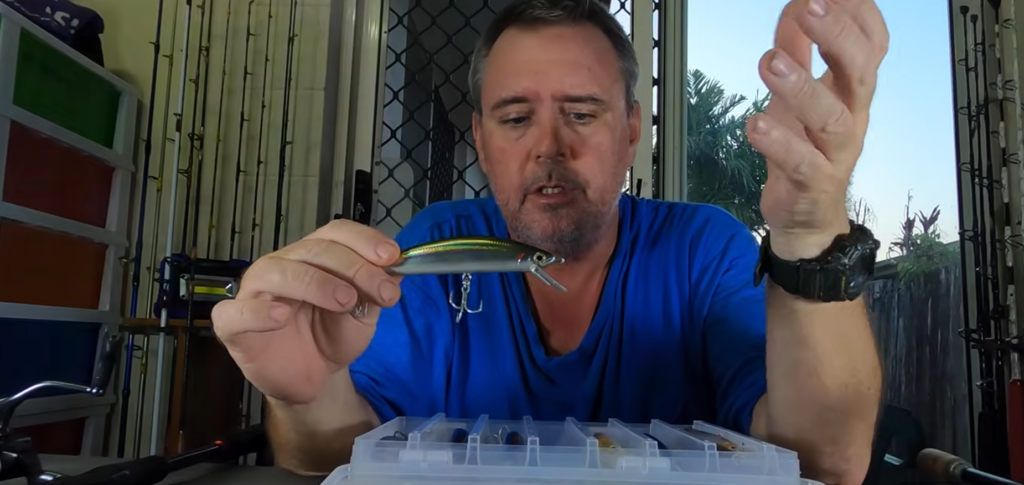
A jerk bait is usually a long, slim hardbody lure with a small bib on the front. You cast it out, work it with the rod tip, and make it dart around like a wounded baitfish. That injured, flashing action is what gets fish fired up.
The good thing about jerk bait fishing is that it works in fresh water and salt water. You can catch flathead, barra, queenfish, jacks, salmon, trevally, bass, jungle perch, trout, mackerel and plenty more depending on where you fish and what size lure you use.
Rapala Australia describes its RipStop jerkbait as having a fast-ripping, flashing jerk-bait action that can be fished by casting and winding, stopping, twitching, snapping, ripping and suspending. That sums up why this lure style is so useful across different species. You can check out the lure example here Rapala RipStop jerkbait.
What Is a Jerk Bait?
A jerk bait is a slim hardbody lure that is designed to dart from side to side when you twitch or rip it with the rod tip.
Most jerk baits have a small bib. That bib helps the lure dive down and gives it action when you work it. Some jerk baits are short and small. Others are long, heavy and built for bigger fish.
That is why jerk bait fishing can cover so many situations.
Small jerk baits can be used for bass, trout, jungle perch and flathead. Medium jerk baits are great for barra, jacks, queenfish, salmon and trevally. Bigger jerk baits can be used around reefs, bommies and heavy structure for trout, mackerel, GTs and other hard-pulling fish.
The trick is matching the lure size to the fish and the outfit.
Visit Fishing Lures That Do the Job for the hard-bodied, surface and squid-style lures I recommend for particular situations.
Best Types of Jerk Baits
There are a few main types of jerk baits.
You will see them sold as floating, slow floating, suspending and sinking.
For most jerk bait fishing, I would stay away from sinking jerk baits unless you have a very specific reason to use them. They can work, but they are not as forgiving, especially for beginners.
A suspending jerk bait is probably the best all-round option.
When you rip it down and stop, it stays at roughly the same depth. That is deadly because the lure sits right in the strike zone and looks like a wounded baitfish that has stopped moving.
A slow floating jerk bait is also excellent. It will rise, but slowly enough that you can pause it and still keep it near the fish.
A fast floating jerk bait can still work, but you need to keep it moving. If you stop too long, it floats back out of the strike zone. That can cost you fish, especially if they are holding down near structure or following the lure.
Best Rod for Jerk Bait Fishing
The best rod for jerk bait fishing depends on the size of the lure.
For smaller and medium jerk baits, a 2500 to 3000 size reel is plenty. Match that with a light graphite rod and 8lb to 16lb braid depending on the fish you are chasing.
For general river and estuary fishing, a 2500 reel with 10lb braid is a good starting point.
If you are chasing barra, queenfish, jacks or bigger flathead, a 3000 size reel with 16lb braid gives you a bit more stopping power.
If you are throwing larger jerk baits around reefs, bommies, heavy structure or bigger fish, step up to a 4000 size reel with 20lb braid or heavier if needed.
The main thing is this: match the rod to the lure.
Do not use a rod that is too soft and whippy. You need enough stiffness in the tip to make the lure dart and dance. A glass-tipped rod is usually too soft for this style.
A graphite rod with a responsive tip is much better.
Stiff Rod or Softer Tip?
This is where personal preference comes in.
I like a stiffer rod for jerk bait fishing because whatever I do with the rod, the lure does. If I rip the rod hard, the lure darts hard. If I snap the rod tip, the lure kicks and flashes.
That is the action I want.
But there is a downside.
A very stiff rod can pull hooks if your drag is too tight or the fish hits close. There is less cushion in the blank. So if you go with a stiff rod, make sure your drag is set properly.
A slightly softer graphite tip can be more forgiving. You might not get quite the same sharp darting action, but you will often stay connected to fish better.
For beginners, I would not overthink it. Get a light graphite spin combo in the right size and avoid anything too soft or too heavy.
How to Work a Jerk Bait
The easiest way to fish a jerk bait is with a rip-rip-pause retrieve.
Cast it out.
Point the rod tip down.
Rip the lure two or three times.
Wind up the slack.
Pause.
Then do it again.
That is the basic retrieve.
For my style of jerk bait fishing, I like to really work the lure hard. Rod tip down, rip-rip-rip, then pause. The lure darts around like a wounded baitfish, flashes in the sun, and then hangs there for a moment.
That pause is important.
A lot of fish will follow the lure while it is moving, then eat it when it stops or slows. If your lure is suspending or slow floating, that pause can be deadly.
You do not need to pause for ages. Sometimes a couple of seconds is enough. Other times, a longer pause works better. Let the fish tell you.
Other Jerk Bait Retrieves That Work
The rip-rip-pause retrieve is my favourite, but it is not the only way to use these lures.
You can also slow roll them.
Cast out and start winding. As the lure begins to swim, you will feel it vibrating through the rod. Once you feel that action, just keep a steady wind going.
This retrieve does not always get as many hits as ripping, but it still catches fish.
Another way is to cast out, wind down until you feel the lure load up, then sweep the rod back in one long movement. That makes the lure dive and swim forward. Then you wind up the slack and do it again.
That retrieve can be worth trying, especially with suspending jerk baits.
But if you are starting out, keep it simple. Rip it three times, pause, wind up the slack, and repeat.
Best Fish to Catch on Jerk Baits
One of the best things about jerk bait fishing is how many species eat them.
In salt water, jerk baits can catch:
Flathead
Barramundi
Mangrove jack
Queenfish
Trevally
Salmon
Mackerel
Coral trout
GTs
In fresh water, smaller jerk baits can catch:
Bass
Trout
Jungle perch
Saratoga
Redfin
That is why they are such a good lure to learn. Once you understand how to work one, you can use the same basic technique in many different places.
You just change the size of the lure, the strength of the gear, and where you fish it.
Cheap Jerk Baits vs Expensive Jerk Baits
You do not need to spend a fortune to start jerk bait fishing.
There are expensive jerk baits, and some of them are very good. They often come with better hooks, better split rings, better finishes and more reliable actions.
But cheaper jerk baits can still catch fish.
The warning is this: if you are chasing powerful fish, check the hardware.
Cheap hooks can bend.
Cheap split rings can open.
Tow points and hook hangers may not be as strong.
If you are chasing small flathead, bass or average estuary fish, you might get away with the standard hooks. But if you are chasing barra, jacks, queenfish, mackerel or reef fish, upgrade the hooks and split rings before fishing them hard.
That one small job can save you losing a good fish.
Downrigger Trolling with Jerk Baits
One thing a lot of people do not think about is trolling jerk baits behind a downrigger.
This can work really well because jerk baits usually have small bibs. They do not pull too hard, so they are less likely to pop out of the downrigger clip.
Down south, some anglers use this style for snapper. You can run the lure close to the reef, keep it in the zone, and cover ground.
I reckon this could be very interesting around the Great Barrier Reef as well.
A jerk bait trolled around bommies, reef edges and deeper structure could get eaten by almost anything. Trout, mackerel, trevally, snapper, queenfish and other reef predators would all be possible.
That could make for some very good fishing and even better footage.
Beginner Jerk Bait Setup
If you are new to jerk bait fishing, do not make it hard.
A simple setup would be:
2500 to 3000 size spin reel
Light graphite rod
10lb braid
Light fluorocarbon leader
Small to medium suspending or slow-floating jerk bait
That will cover a lot of river, estuary and light saltwater fishing.
If you are heading north and chasing barra, jacks and queenfish, step it up a bit. A 3000 size reel with 16lb braid is a nice middle ground.
For bigger reef and heavy-structure work, go heavier again.
The important thing is to get out and cast. You will learn more from one afternoon working a jerk bait along a riverbank than you will from staring at a tackle wall for an hour.
Final Thoughts on Jerk Bait Fishing
Jerk bait fishing is simple, effective and a lot of fun.
These lures look complicated at first, but they are not. Find a long, slim lure with a small bib. Choose a suspending or slow-floating model if you can. Match it to a light graphite rod. Then cast it out and work it with short, sharp rips.
Rip, rip, rip.
Pause.
Wind up the slack.
Repeat.
That is enough to catch a lot of fish.
You will get sore arms if you work them hard all day, but that is part of it. You are making the lure come alive, and when a fish smashes it on the pause, it is worth the effort.
For beginners, jerk baits are one of the best hardbody lures to learn. They catch fish in rivers, estuaries, fresh water, shallow reefs and tropical systems.
Buy one, tie it on, walk down to your local river and start casting.
You will catch fish on them.
More Aussie Fishing Guides & Resources
Looking for more practical fishing tips? I’ve put together a growing collection of Shannons Fishing resources, including downloadable PDF guides, cheat sheets, rigs, bait tips, and step-by-step fishing advice made for Aussie fishos.