
Are expensive fishing lures really worth the money, or are some of them better at catching fishermen than fish? It is a fair question when one hard-bodied lure can cost $30 to $40, while another lure with a similar size and shape may cost only a couple of dollars.
After more than 20 years working in the tackle trade, I have used everything from bargain-bin specials and bulk online lures to high-end Japanese models and premium trolling lures. My honest answer is that cheap and expensive lures both have a place. Price alone does not tell you whether a lure will catch fish.
The real differences usually come down to swimming action, quality control, durability, colours and the strength of the hooks and split rings. Understanding those differences can save you money and help you choose the right lure for the fishing in front of you.
Are Expensive Fishing Lures Worth the Extra Money?
In many situations, expensive fishing lures are worth buying because you are paying for consistency. A good premium lure should swim correctly straight out of the packet. Its bib should be fitted straight, the body should be balanced and its action should remain reliable after catching multiple fish.
Manufacturers of expensive fishing lures generally spend more time developing their actions, testing prototypes and creating detailed colour patterns. When the water is clear or the fish are fussy, that realistic finish and carefully tuned action can make a difference.
However, buying expensive fishing lures does not guarantee that every component will suit Australian fishing. Some high-priced models still come fitted with light hooks or split rings that I would replace before targeting strong fish. Always judge the entire lure, not just the name printed on the packet.
Do Cheap Fishing Lures Actually Catch Fish?
Cheap lures can catch an incredible number of fish. One of my favourite shallow-running jerkbaits cost less than $2 when I bought a bulk batch online. That little lure has caught flathead over the flats, small school mulloway, tailor, trevally and queenfish. It has been scratched up, smashed around rocks and repeatedly attacked, yet it continues to swim.
That experience taught me that expensive fishing lures do not automatically catch more fish. If a cheap lure has the right size, profile, depth and action, a hungry fish does not care what it cost.
The problem is consistency. With some low-cost lures, one will swim perfectly while the next one rolls, spins or blows out on the surface. A bib may be slightly crooked or the internal weight may not be positioned correctly. You need to test every cheap lure instead of assuming it is ready to fish.
Cheap Does Not Always Mean Poor Quality
A discounted lure in a tackle-shop clearance bin is not necessarily a cheap or poorly made lure. Shops regularly clear discontinued colours, old packaging and excess stock. You may be buying a proven brand-name lure at a bargain price.
Store-brand and bulk-manufactured lures are different. They are built to hit a lower price point, so quality control and hardware can vary. Some are junk, but others are absolute fish catchers. The only reliable way to know is to test them.
Why Expensive Fishing Lures Usually Swim Better
The biggest advantage of expensive fishing lures is that they normally work straight out of the box. Brands such as DUO, Jackall and Nomad have built their reputations around repeatable swimming actions and reliable designs.
That matters when trolling. A lure that rolls over or tracks badly can ruin a spread, tangle other lines and waste valuable fishing time. It also matters when casting at fussy fish because the lure needs to behave properly at different retrieve speeds.
Nomad lures are a good example. They are not cheap, but the models I have used have consistently tracked correctly and continued swimming after fish have knocked them around. When you want confidence that a lure will work without constant adjustment, paying extra can be worthwhile.
Even expensive fishing lures are not flawless. In my experience, some deep-diving models with large plastic bibs can become difficult to tune after being hit or knocked. Other anglers may have a completely different experience with the same lure. That is why I judge each model by how it performs, not by brand loyalty alone.
Upgrade the Hooks and Split Rings When Needed
Cheap lures often save money by using basic hooks and split rings. The body may be excellent, but the hardware may rust quickly, open under pressure or lack the strength required for tropical species.
Before fishing a budget lure, check:
- Whether the hooks are sharp enough to catch lightly on a fingernail.
- Whether the hook gauge suits the fish you are targeting.
- Whether the split rings are strong and properly closed.
- Whether heavier replacement hooks affect the lure’s action or buoyancy.
- Whether the lure still swims straight after the upgrade.
Do not automatically fit the heaviest hooks you can find. Extra weight can make a floating lure suspend or sink, and it can kill the action that made the lure effective. Match the replacement hardware to the lure and test it beside the boat before sending it out.
The same inspection should be made on expensive fishing lures. A premium body and finish can still be supplied with hooks designed for lighter overseas species. If you are chasing mackerel, trevally or powerful reef fish, the factory hardware may need upgrading regardless of the lure’s price.
Visit Fishing Lures That Do the Job for the hard-bodied, soft plastic, surface and squid-style lures I recommend for particular situations.
When Cheap Lures Are the Smarter Choice
Compared with expensive fishing lures, cheap options make perfect sense when fishing snaggy country. If I am casting across shallow reef, around rocks, beside mangroves or near timber, I do not want to be afraid of losing a $40 lure.
A $1 or $2 lure lets you cast tighter to structure and fish it aggressively. If it gets bricked by a fish or wedged in the reef, you can tie on another one and keep going. That freedom can help you catch more fish because you are putting the lure where the bites happen.
Budget lures and jigs are also useful when fish are thick and feeding hard. When everything in the school is being attacked, expensive fishing lures may offer little practical advantage. A basic metal jig with a decent hook can be just as effective, and losing it to the reef will not ruin your day.
I have used very cheap bulk jigs that caught plenty of fish and came with surprisingly usable hooks. Compare that with a premium jig costing $30 or $40. Expensive fishing lures may have excellent actions and finishes, but they are no use sitting untouched in the tackle box because you are too scared to lose them.
When Expensive Fishing Lures Can Catch More Fish
There are harder days when premium tackle earns its place. Clear water, heavy fishing pressure and shut-down fish can demand a more convincing presentation. This is where expensive fishing lures can provide an edge through refined action, better balance and detailed baitfish colours.
A natural colour gradient, flash at the correct angle or action that remains stable at speed may trigger a fish that ignores a plain lure. You are not buying magic; you are buying a lure that has been designed and tested to perform a particular job reliably.
I also prefer proven premium models when I need one lure to stay in the water for hours. Offshore trolling is a good example. Constantly retrieving, tuning and replacing a poorly swimming lure wastes time. Reliability becomes more valuable than the initial saving.
Build a Mixed Tackle Box
For most fishos, the smartest answer is not choosing one side. Carry a mixture of cheap lures and expensive fishing lures, then select them according to the conditions.
Use cheaper options when:
- Fishing close to reef, rocks, timber or mangroves.
- Fish are feeding aggressively.
- You expect to lose jigs or lures.
- You have tested the lure and confirmed that it swims correctly.
Use expensive fishing lures when:
- Fish are finicky or heavily pressured.
- Water clarity makes realistic colour and action important.
- You need consistent high-speed trolling performance.
- A proven model matches a specific baitfish, depth or technique.
Whichever option you choose, test the lure beside the boat, check the hardware and carry spares. Also check the current Queensland recreational fishing rules before your trip, particularly species limits, closed seasons, closed waters and gear restrictions.
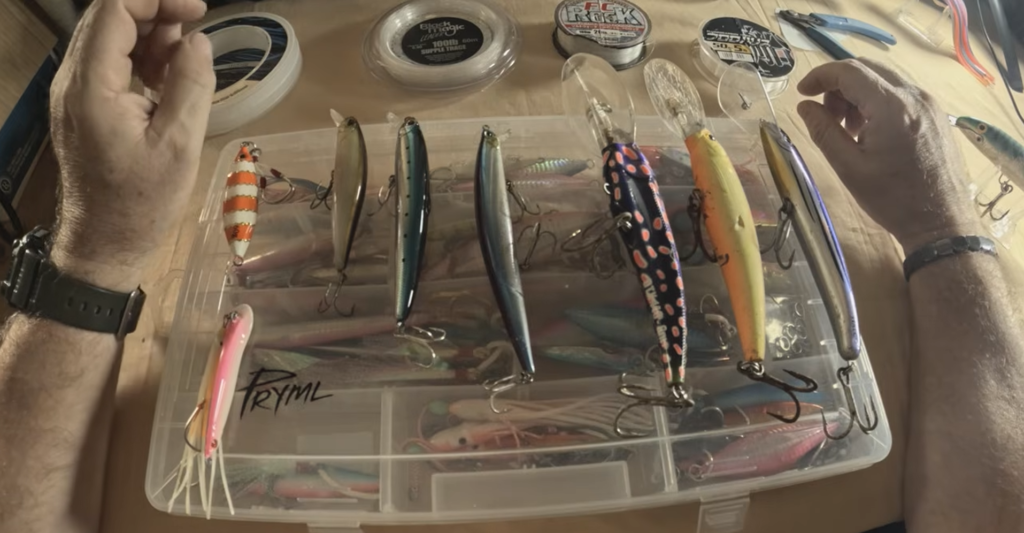
Final Verdict: Cheap vs Expensive Fishing Lures
So, are expensive fishing lures a scam? No. Good premium models earn their price through better quality control, reliable swimming actions, durability and more refined finishes. On difficult days, those details can help produce a bite.
But cheap lures are not automatically rubbish. Some of the best fish-catching lures in my tackle box cost only a few dollars. Once they have been tested and fitted with suitable hardware, they can catch just as many fish as far dearer alternatives.
My tackle box will always contain both. I use affordable lures when the chance of losing gear is high, and I reach for proven premium lures when the fishing is difficult or reliable action is critical. The best lure is not always the most expensive one—it is the one that swims properly, suits the conditions and gives you the confidence to keep casting.
What do you use: premium brands, bargain lures or a mixture of both? Leave a comment with the cheap lure that has surprised you most. For more practical fishing guides and printable resources, visit the Shannons Fishing Resources page.
More Fishing Guides & Resources
Want more practical fishing tips you can use straight away? Check out the latest Shannon’s Fishing PDF guides covering rigs, bait tricks, lure techniques, and proven methods for catching more fish around Australia.