
If you are throwing soft plastics around without catching many fish, these soft plastic fishing tips could completely change your results. Soft plastics are extremely effective, but several common mistakes can make even the best lure look lifeless and unnatural.
Many anglers work their lure too quickly, use the wrong jig head or fish in areas that hold very few fish. Others miss bites because they are not watching their line.
The good news is that you do not need an advanced retrieve or an expensive outfit to catch fish. You may simply need to slow down, keep your technique simple and pay more attention to what your lure is doing.
Soft Plastic Fishing Tips for Slowing Down Your Retrieve
One of the biggest mistakes I see is anglers fishing their soft plastics too quickly.
They cast out, rip the rod upwards several times, retrieve the slack and immediately repeat the process. Although this aggressive technique can occasionally catch fish, it often moves the lure away before a fish has time to strike.
Start by casting your soft plastic out and allowing it to sink to the bottom. Wind up the loose line and use your wrist to give the rod two small lifts.
You do not need to lift with your entire arm. Two controlled movements of the wrist will make the rod tip move far enough to bounce the plastic away from the bottom.
Lower your rod, retrieve the slack and then wait for a couple of seconds. Continue using this simple pattern:
- Let the lure reach the bottom.
- Give it two small lifts.
- Lower the rod tip.
- Wind up the slack.
- Pause before moving the lure again.
This retrieve works with paddle tails, curl tails and many other soft plastic designs.
Why Fish Strike Soft Plastics During the Pause
The pause is one of the most important parts of soft plastic fishing.
Most anglers concentrate on how they lift or twitch their lure. However, a large percentage of strikes occur when the lure is falling or sitting still on the bottom.
After you lift the lure, its tail continues moving as it sinks. A paddle tail will swing from side to side, while a curl tail will twist and move naturally through the water.
Current will also keep a soft tail moving while the lure is sitting still. That means you do not need to create all the action yourself.
Once the lure reaches the bottom, wait for a few seconds. A fish may have followed it down and could be looking at it before deciding to strike. Moving it immediately can take the lure away from that fish.
Choose the Correct Jig Head Weight
Choosing the wrong jig head is another common problem. Some anglers use a jig head that is far too heavy, while others do not use enough weight.
An overweight jig head makes the lure sink like a brick. It falls straight to the bottom and can lose much of its natural action.
A jig head that is too light creates the opposite problem. Wind, depth and current may stop the lure from reaching the strike zone.
The correct jig head depends on:
- The depth you are fishing
- The strength of the current
- Wind conditions
- The size of your soft plastic
- The species you are targeting
- Whether you need to fish near the bottom
When targeting flathead across shallow flats, I often use a jig head around 3/8 ounce. It is heavy enough to reach the bottom, disturb the sand and continue working down a drop-off.
A much lighter jig head may be better around pontoons, canals and sheltered water. The slower fall can be particularly effective around bream and other fish holding close to structure.
These soft plastic fishing tips are starting points rather than fixed rules. Conditions can change during a session, so carry several jig head weights and adjust when necessary.
Match the Hook and Plastic to Your Target Species
The hook must fit the soft plastic properly. A hook that is too large can restrict the lure’s movement, while a small hook may not provide enough clearance for a larger plastic.
The plastic should also suit the fish you are chasing.
A large paddle tail might be suitable for mulloway or snapper, but it may be excessive when targeting average-sized bream. Likewise, a small plastic intended for bream and flathead may not be my first choice when specifically chasing a 30 or 40-pound mulloway.
If you are unsure, take your plastics into a good local tackle shop. Tell the staff where you are fishing, the likely depth, the current and the species you want to catch. This gives them enough information to recommend a suitable hook and jig head.
Visit Fishing Lures That Do the Job for the hard-bodied, soft plastic, surface and squid-style lures I recommend for particular situations.
Downsize Your Soft Plastic When the Fishing Is Tough
One of my favourite soft plastic fishing tips is to downsize when fish refuse to bite.
You might be fishing an area that regularly holds fish and using a lure that has worked many times before. However, fish can become cautious or stop feeding aggressively.
When that happens, change to a smaller plastic and a lighter jig head. A smaller presentation can look less threatening and may be easier for an inactive fish to eat.
Downsizing does not work every single time, but it has helped me trigger bites from several different species on otherwise difficult days.
Fish Soft Plastics Around Structure
Even an excellent lure cannot catch fish if you constantly cast it into empty water.
Structure provides fish with food, shade, shelter and ambush points. Instead of repeatedly casting across a featureless area, look for something that gives fish a reason to be there.
Productive structure can include:
- Pontoons and pylons
- Rock walls and reefs
- Fallen timber
- Weed and grass edges
- Moored boats with established marine growth
- Drop-offs and channel edges
- Drains running off sandbanks
- Isolated patches of sand surrounded by weed
Flathead often sit along the edges of weed, drop-offs and drains, waiting for bait to move past. Mangrove jack, trevally and bream can hold close to pontoons, boats, timber and rock walls.
Cast close to the structure and slowly work the lure through the likely strike zone. Be prepared for a bite as the lure sinks.
Fish Drains, Drop-Offs and Moving Water
Drains can be outstanding places to use soft plastics.
As the tide falls, water draining from flats and sandbanks carries prawns, baitfish and other food towards deeper water. Predatory fish often wait near the mouth of the drain.
Cast into or across the moving water and slowly bounce your plastic back along the bottom. Flathead are a common target, but larger drains and drop-offs can also hold bream, trevally and school mulloway.
Moving water is generally better than completely slack water. Current activates bait, encourages predators to feed and creates action in the tail of your lure.
The best stage of the tide will vary between locations and species. Learn what happens at your local fishing spots during both the incoming and outgoing tide.
Always check the current Queensland recreational fishing rules before fishing, as size limits, possession limits and closures can change.
Watch Your Line for Soft Plastic Strikes
Watching your line is one of the simplest soft plastic fishing tips, but many beginners overlook it.
A fish can grab the plastic while it is sinking without transmitting an obvious bite through the rod. You might only see the line twitch, jump, straighten or move sideways.
Watch the line immediately after casting and every time the lure sinks following a lift. Once the lure reaches the bottom, retrieve the slack without pulling the plastic forward.
Keep enough contact to see or feel a bite, but do not hold the line so tight that you prevent a natural fall.
Use Natural Colours in Clean Water
Soft plastic colour can become confusing because every angler has a favourite. Instead of buying every colour available, begin with one simple rule:
- Use natural colours in clean water.
- Use brighter colours in dirty water.
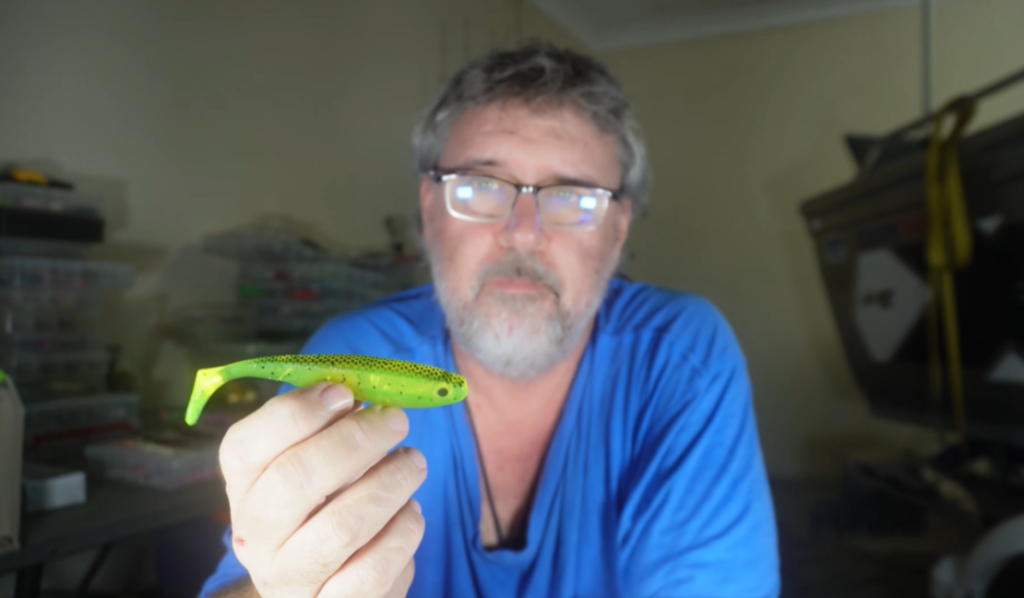
Natural baitfish, prawn and translucent colours work well when fish can clearly inspect the lure. In dirty or discoloured water, brighter pink, green, yellow or chartreuse plastics can be easier to locate.
Colour matters, but location, depth, jig head selection and retrieve speed are normally more important. Do not allow colour choice to distract you from the basic parts of the technique.
Stop Working the Rod Too Aggressively
Soft plastics already have action built into their tails. You do not need to violently rip the rod or shake it constantly.
Small wrist movements are usually enough. Allow the lure to jump away from the bottom, sink naturally and remain still for a few seconds.
Aggressive movements can make the presentation look unnatural. They can also pull the lure away from a fish before it has committed to striking.
Keep everything controlled and allow the plastic to do the work.
Do Not Give Up on Soft Plastic Fishing
Lure fishing takes time to learn. Different rods, lines, jig heads and personal retrieve styles can make the same lure behave differently.
Do not expect to perfectly copy another angler’s technique immediately. Experiment until you discover a retrieve that suits your outfit and the places you fish.
The first few fish are important because they build confidence. Once you understand how the lure feels when it touches the bottom and recognise the signs of a bite, soft plastic fishing becomes much easier.
Remember these final soft plastic fishing tips: slow down, use small rod movements, select the correct jig head, fish around structure, watch your line and downsize when the bite becomes difficult.
Once the technique clicks, you can grab one rod and a handful of plastics and enjoy a productive fishing session without carrying bait.
More Fishing Guides & Resources
Want more practical fishing tips you can use straight away? Check out the latest Shannon’s Fishing PDF guides covering rigs, bait tricks, lure techniques, and proven methods for catching more fish around Australia.