
Lure hook weight is something a lot of anglers overlook when they change hooks on a hard body lure. Most people think that if the new hooks are sharp and strong, the job is done.
But it is not always that simple.
If the new hooks are lighter or heavier than the original hooks, the lure can change completely. It might not suspend the same. It might not sink the same. It might lose that little action that made it so good in the first place.
That is exactly what happened to me after I changed hooks on one of my lures.
Why Lure Hook Weight Matters
Lure hook weight matters because every hard body lure is balanced around its original setup.
The body shape, bib angle, hook size, split rings, and hook weight all work together. When you change one part, the lure can behave differently in the water.
Sometimes that change is good.
Sometimes it ruins the lure.
In this case, I had changed the hooks because the old ones were no good. I had been lazy, and after missing a good flathead, it was obvious the hooks needed to go.
The new hooks were sharp. They were strong. They were a good size.
But they were lighter than the original hooks.
That small difference in lure hook weight was enough to change the action.
The Problem After Changing Hooks
After fitting the new hooks, I took the lure down to the water and gave it a cast.
Straight away, it did not feel right.
The lure still worked, but it did not have the same action I like. It was not sitting the same way. It was not swimming the way it used to.
That is when you need to stop and look at the whole lure, not just the hooks.
A lot of anglers would blame the lure.
They might say, “This lure is no good anymore.”
But sometimes the lure is fine. The problem is the hook weight.
The original hooks on this lure were a heavier gauge. The new hooks were a lighter gauge. That meant the lure had less weight hanging underneath it, and that changed how it sat in the water.
Using Lead Wire to Adjust Lure Hook Weight
The fix was simple.
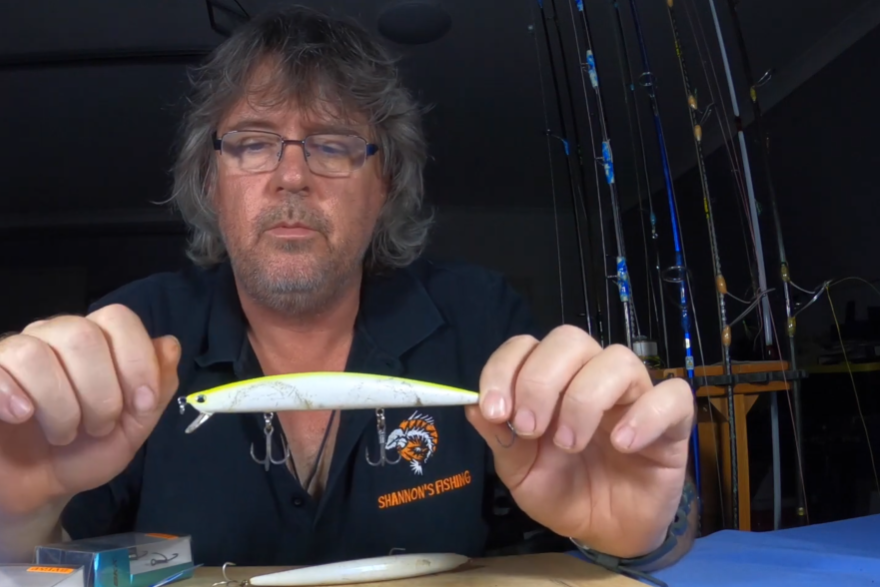
I used a small amount of thin lead wire wrapped around the shank of the middle hook.
Most decent tackle shops sell this sort of lead wire. It is like a thin lead rope or soft wire, and you can wrap it around the hook shank to add weight.
You do not need much.
That is important.
If you put too much lead on, you can make the lure sink too fast. You can also kill the action completely. Lead is heavy, so start with only a few wraps.
I started with around four or five wraps on the middle hook.
Then I tested the lure again.
That small adjustment brought the action back.
You can see the equipment I recommend for different styles of fishing on my main Fishing Gear page.
Why I Added Weight to the Middle Hook
I only added the lead wire to the middle hook.
You could add a little bit to each hook if you wanted to, but I like starting with the middle hook because it is a simple way to adjust the balance without going overboard.
The goal was not to turn the lure into a brick.
The goal was to get the lure back to the action I liked.
This lure is more of a suspending style lure. It does not float straight back up quickly, and it does not sink like a stone. It sits there nicely, and that is part of what makes it work.
By adding a bit of lure hook weight back into the setup, the lure started behaving properly again.
Choosing Sharp Hooks Without Ruining the Lure
The hooks I changed to were sharp, light-gauge BKK trebles. BKK has a good reputation for sharp treble hooks, and the Spear-21 SS style hooks are made as a fine-gauge treble with quick hook penetration.
You can check the official hook information here: BKK Spear-21 SS treble hooks.
Sharp hooks matter.
After missing fish because of poor hooks, you do not want to keep using old blunt trebles. That is how you lose fish that should have been hooked.
But when you upgrade hooks, you still need to think about lure hook weight.
A sharper hook is great.
A stronger hook is great.
But if it changes the lure action too much, you need to tune the lure again.
Test the Lure After Every Hook Change
This is the part I want people to remember.
Do not just change hooks and assume the lure is right.
Test it.
Cast it in shallow water. Pull it beside the bank, boat, pontoon, or ramp. Watch how it swims.
Look at how it sits when you pause it.
Does it float up too fast?
Does it sink too quickly?
Does it roll on its side?
Does it still have the same action?
If it does not swim right, check the hook weight before you give up on the lure.
Sometimes all it takes is a little bit of lead wire around one hook to bring it back.
How Much Lead Wire Should You Use?
Start small.
A few wraps is enough to begin with.
Do not wrap half the hook in lead and expect the lure to swim properly. You are fine-tuning, not rebuilding the lure.
Add a small amount, test it, and then add more if needed.
If you go too far, take some off.
That is the good thing about using lead wire. You can adjust it easily until the lure does what you want.
This works especially well when you cannot find the exact same hooks that came on the lure originally.
Sometimes the original hooks are hard to match. You might find the right size, but not the same gauge. Or you might find the right strength, but they weigh slightly different.
That is when adjusting lure hook weight becomes very useful.
When This Tweak Can Help
This trick is handy when a lure loses action after a hook change.
It is also useful if you want a lure to sink slightly faster, suspend a little better, or sit lower in the water on the pause.
It can help with hard body lures, jerkbaits, minnows, and other lures where balance is important.
It is especially useful for flathead fishing, because a lure that pauses properly can get more bites. Flathead often hit when the lure stops, stalls, or hangs in front of them.
If the lure is floating up too fast or not sitting right, you might be missing bites without even knowing it.
Final Thoughts on Lure Hook Weight
Lure hook weight is a small detail, but it can make a big difference.
If you change hooks and your lure does not swim the same, do not throw it away. Do not blame the lure straight away.
Check the hooks.
If the new hooks are lighter than the originals, try adding a few wraps of lead wire around the hook shank. Start with the middle hook, test it in the water, and adjust from there.
That little bit of weight can bring the lure back to life.
It is a simple trick, but it works.
Sharp hooks help you hook more fish, but the lure still has to swim properly. Get both things right, and you give yourself a much better chance the next time a good fish hits.
More Fishing Guides & Resources
Want more practical fishing tips you can use straight away? Check out the latest Shannon’s Fishing PDF guides covering rigs, bait tricks, lure techniques, and proven methods for catching more fish around Australia.