
The Dr Prawn soft plastic lure is one of those lures that has started getting plenty of attention, especially up north where anglers are using them on barra and jacks.
I have seen a lot of guys talking about them, and a few fishos up here are already having good success with them. Most of that talk has been around river fishing, especially for barramundi, mangrove jack and other hard-hitting tropical fish.
But I did not buy the Dr Prawn soft plastic lure for barra.
I am not really a barra fisherman, and I do not plan on becoming one anytime soon. What caught my attention is how this lure might work offshore, especially around reef edges, shallow bommies and mixed reef fish.
It looks like a proper prawn profile. It has a soft plastic body, internal weight on the pre-rigged version, a big hook and a fin or ribbon-style section underneath that should create action in the water. Fishcraft’s Dr Prawn is sold in both rigged and unrigged versions, and tackle stores describe it as a realistic prawn imitation designed for species from bream to barra. You can see an example of the unrigged model here Dr Prawn Unrigged Lure.
So the real question is simple: how would I fish the Dr Prawn soft plastic lure, and where could it actually shine?
What Is the Dr Prawn Soft Plastic Lure?
The Dr Prawn soft plastic lure is a prawn-style soft bait made to imitate one of the most natural food sources in the water.
Almost everything eats prawns.
Barra eat prawns.
Jacks eat prawns.
Flathead eat prawns.
Snapper, cod, trout, bream, queenfish and plenty of reef species will all eat a prawn if it drifts past them in the right place.
That is why prawn lures make sense.
The Dr Prawn comes in different sizes, colours and rigging options. Some are sold pre-rigged, which means the weight and hook are already built in. Other versions are unrigged, so you can rig them yourself on weedless hooks, jig heads or whatever setup suits your fishing.
The pre-rigged version is the easy option. Tie it on, cast it out and start fishing.
The unrigged version gives you more control, especially if you want to fish weedless around timber, mangroves, rocks, snags or shallow reef.
Pre-Rigged Dr Prawn vs Unrigged Dr Prawn
The first thing to understand with the Dr Prawn soft plastic lure is the difference between pre-rigged and unrigged.
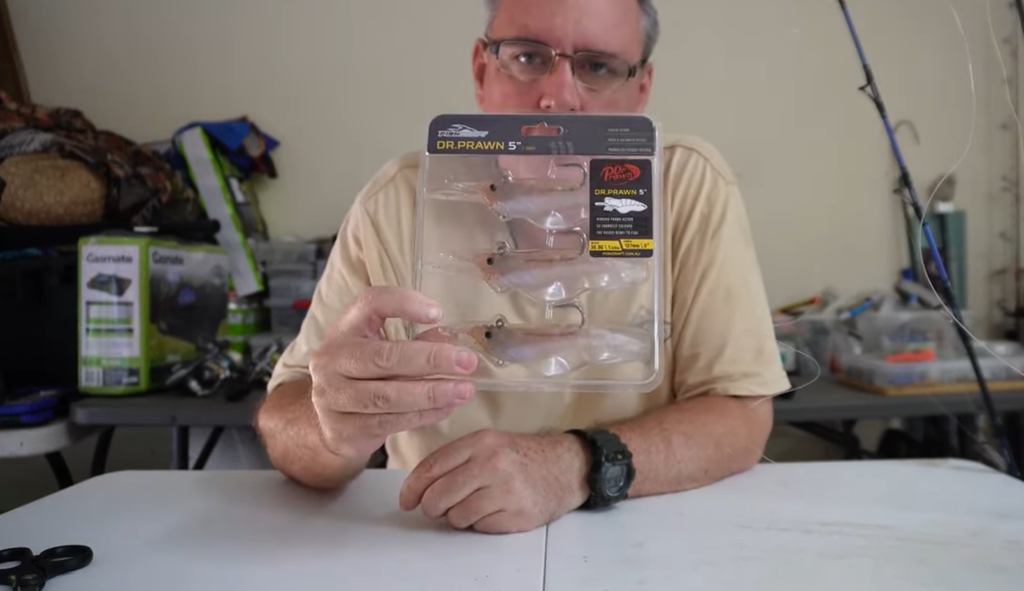
The pre-rigged model is simple. It already has the weight inside the body and the hook in place. That suits anglers who just want to open the packet, tie it on and go fishing.
That is why I bought the pre-rigged version.
For offshore reef fishing, I like the idea of something I can clip on quickly and work around shallow reef edges, bombies or deeper broken ground without mucking around too much.
The unrigged version is better if you want to customise it.
A lot of barra and jack anglers seem to prefer buying the unrigged Dr Prawn and rigging it on their own weedless hooks. That makes sense in rivers and creeks where you are casting around snags, mangroves and structure.
But there is one thing to know.
If you rig these weedless, you may need to cut a slit in the belly of the lure. The body is solid, so when a fish bites down, the plastic may not collapse properly over the hook. If the lure does not slide down and expose the hook point, you can miss fish.
That is the downside some anglers have mentioned.
For weedless fishing, a belly slit can help the lure compress properly and improve hook-up rates.
Visit Fishing Lures That Do the Job for the hard-bodied, surface and squid-style lures I recommend for particular situations.
Why Barra and Jacks Should Eat It
The Dr Prawn soft plastic lure looks made for barra and jacks.
Up north, plenty of anglers are already using prawn-style soft plastics in rivers, drains, mangroves and creeks. A lure like this makes sense because barra and jacks are ambush predators. They sit around structure and smash anything that looks like an easy feed.
A prawn profile is a safe bet.
Cast it near timber, rock bars, drains, mangrove edges or little current lines and work it back slowly. The lure should kick, glide and pulse through the water.
Tackle stores list the Dr Prawn in sizes suited to different fish, with smaller models aimed at species like flathead, bream and perch, and larger models suited to bigger flathead, snapper, cod, barra, queenfish and mulloway.
For barra and jacks, I would be using the larger sizes, heavier leader and a stronger outfit. These fish do not play fair.
Fishing the Dr Prawn on a Light Spin Outfit
One way to fish the Dr Prawn soft plastic lure is on a light spin outfit.
A 2500 to 3000 size reel with 15lb to 20lb braid would suit a lot of northern river and estuary work. If you are down south chasing flathead over the flats, you could lighten up to around 10lb braid and a 16lb leader.
That would be a great way to fish this lure over sand flats, weed edges and shallow drains.
For flathead, I reckon this lure could work very well.
Big flathead love prawns, and they love soft plastics that can be worked close to the bottom. Cast it out, let it sink, then use small hops, slow lifts or gentle twitches to make it look like a prawn kicking along the bottom.
This is where the Dr Prawn could be more than just a barra lure.
It could be a very handy flathead lure, especially in clear shallow water where a natural prawn profile looks believable.
Fishing the Dr Prawn on a Slow Pitch Outfit
This is the option I am most interested in.
I reckon the Dr Prawn soft plastic lure could be a lot of fun on a light slow pitch outfit around shallow reefs.
Something like a 20lb slow pitch setup would be perfect for experimenting. Drop it down around reef edges, shallow rubble, pressure points and broken ground, then work it slowly.
It might not be the standard way people fish this lure, but that is exactly why I want to try it.
A prawn drifting and kicking around reef country should get eaten. Coral trout, cod, sweetlip, tuskfish, snapper, trevally and other reef species could all have a go at it.
Will I get dusted? Probably.
But that is half the fun.
A soft prawn lure on light gear around reef edges is not exactly the safest way to fish, but it could produce some cracking bites.
Casting the Dr Prawn Over Reef Flats
Another way I want to fish the Dr Prawn soft plastic lure is casting it across reef flats and shallow bommies.
This is where I would step up the gear.
A PE2 outfit, 30lb braid and a strong leader would make more sense around shallow reef, especially if coral trout, cod, trevally, queenfish or mackerel are around.
Cast it over the reef edge, let it sink, then work it back with lifts, pauses and slow rolls.
The risk is obvious. Reef fish hit hard and head straight home. A soft plastic prawn is not going to last forever around teeth, coral and rough country.
But the bite potential is massive.
That prawn profile could be perfect for shallow reef predators sitting around coral edges, gutters and bombies waiting for food to wash past.
Could the Dr Prawn Work Down South?
The Dr Prawn soft plastic lure should not be seen as just a northern lure.
Down south, I reckon it could be deadly on big flathead.
Fish it over sand flats, drop-offs, weed beds, drains and estuary edges. Use the smaller or medium sizes, lighter braid and a fluorocarbon leader.
A simple lift-and-drop retrieve would be enough.
Cast it out.
Let it sink.
Lift it gently.
Let it fall back.
Pause.
Repeat.
Flathead often eat on the drop, so do not rush the retrieve.
It could also work on school mulloway, snapper, bream and estuary perch depending on the size and rigging. Anywhere prawns are a natural food source, this lure has a chance.
What Colours Should You Use?
The Dr Prawn comes in several colours, and this is where testing matters.
Natural prawn colours are usually a safe starting point. Anything that looks like an oily prawn, clear prawn, olive prawn or natural bait colour should work in clear water.
Brighter colours can be useful in dirty water, deeper water or low light.
For reef fishing, I would be interested in natural colours first, then brighter options if the water is stirred up or the fish need something more visible.
Colour can matter, but action and placement usually matter more.
Put the lure near fish, make it look alive, and you are in the game.
Final Thoughts on the Dr Prawn Soft Plastic Lure
The Dr Prawn soft plastic lure looks like a very interesting bait.
Most people seem to be talking about it for barra and jacks, and fair enough. It looks like it would suit that fishing perfectly.
But I reckon it has more uses than that.
I want to try it offshore.
I want to slow pitch it.
I want to cast it over reef flats.
I want to see what eats it around shallow reef and broken ground.
That is what makes lures fun. You do not always have to use them exactly the same way everyone else does.
For barra fishos, the Dr Prawn already looks proven. For reef fishos, flathead fishos and anyone who likes trying something different, it could be well worth a crack.
I bought the pre-rigged version because I want to keep things simple. Tie it on, cast it, jig it, slow work it and see what happens.
Now the real test is getting it in the water.
More Fishing Guides & Resources
Want more practical fishing tips you can use straight away? Check out the latest Shannon’s Fishing PDF guides covering rigs, bait tricks, lure techniques, and proven methods for catching more fish around Australia.