
When the mackerel season hits in Southeast Queensland, there is a lot of noise at the boat ramps about the latest gear. But as any old salt will tell you, your success usually comes down to one thing: how you present your bait. If your bait doesn’t look natural, you’re just washing your gear. In this guide, I’m sharing my essential Mackerel rigging tips to help you turn those follows into solid hookups.
Whether you are using live yakkas or trolling dead slimies, these old school fishing techniques focus on the fundamentals. We’re going to cover everything from simple live bait setups to the more technical nose-cone trolling rigs.
1. The Simple Live Bait “Nose Pierce”
If you are slow trolling or float lining with live yakkas or slimies, simplicity is your best friend. For these Mackerel rigging tips, I use a small nose hook and a trailing stinger treble.
Take your front hook and pierce the bait through the nose, just in front of the eyes. Make sure you hit that hard part of the snout so the hook doesn’t pull out when the fish kicks. I don’t worry about tucking the treble into the belly. When you’re slow trolling, the fish is swimming hard, and that treble will naturally hang back near the tail. Nine times out of ten, a Spanish or Spotted Mackerel will strike the tail first, and that’s exactly where your stinger is waiting.
2. Transitioning to the Drift
A secret many anglers miss is adjusting the rig when you stop the boat. If you’ve spent all morning driving around and decide to go for a drift, you need to change your hook placement. Without the forward motion of the boat, a nose-hooked bait will just hang awkwardly.
When drifting, I recommend pinning the hook up under the tail. This allows the fish to swim away from the boat naturally. Without that forward drag, a head-hooked fish often gets bit off at the head, leaving you with a “halved” bait and no fish in the hatch.
3. Mastering the Dead Bait Trolling Rig
For those of you trolling around the gravel patches or the 24-fathom reefs, a nose-cone rig is the gold standard for Spanish Mackerel secrets. These rigs use a spike and a spring to keep the bait secured at higher speeds.
The Setup:
- Measure first: Line the bait up against the rig so the spike sits right between the eyes.
- The Spike: Push the wire spike straight up through the bottom of the jaw and out through the hard bone at the top of the head.
- The Spring: Slide the nose cone down and wind the spring onto the nose of the bait until it’s snug.
This creates a rigid “point” that cuts through the water, preventing the bait from washing out or spinning.
See my Mackerel Fishing Gear page for the tackle and lures I recommend for casting and trolling.
4. The Secret to Tracking Straight
The most important of all Mackerel rigging tips is ensuring your bait tracks straight. A spinning bait is a “scarecrow” to a mackerel. Before you let your line out, drop the bait beside the boat while you’re in gear.
If it’s a small slimy or a pilchard, it won’t have a massive tail kick, but it must track like an arrow. If it’s twisting or veering to one side, your hooks are likely crooked. Pull it back in, straighten the hooks, and reset. You want it to look like a wounded fish trying its best to stay with the school.
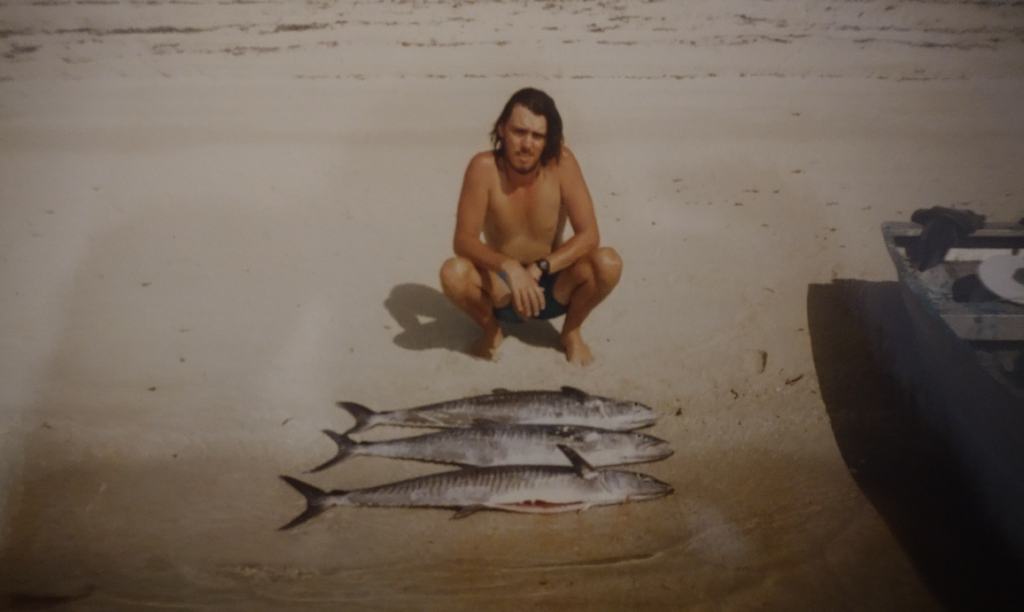
5. Adjusting for Different Bait Species
Don’t be afraid to change your rig to suit what’s in the tank. If you’ve caught bigger baits like tailor or large pike, you need to increase the distance between your nose hook and your stinger. You might even want to step up to a four-hook rig for long baits like garfish.
Always ensure you are following local fishing size and bag limits for your bait species as well as your target catch. Using a legal-sized tailor as bait can be deadly on a big Spaniard, but you’ve got to play by the rules.
More Aussie Fishing Guides & Resources
Looking for more practical fishing tips? I’ve put together a growing collection of Shannons Fishing resources, including downloadable PDF guides, cheat sheets, rigs, bait tips, and step-by-step fishing advice made for Aussie fishos.
More Mackerel Fishing Guides
Mackerel Fishing Rigs and Lures