
Red emperor fishing doesn’t have to mean heading straight for the biggest reef on your chart. Some of the most productive ground I fished during my professional fishing days was much less obvious: the flatter country between the mainland and the reef, where fish were moving around and feeding.
Around the Swains, we called that area “the paddock”. While plenty of boats travelled straight across it, we spent time searching it for schools of reds.
If you want to catch a decent feed, the basics matter: find the right ground, work with the current, use tackle that can handle the fish, and put down a bait that survives the little pickers. Here’s how I approach it.
Where to Start Red Emperor Fishing Around the Swains
For red emperor fishing, don’t overlook the country you travel across on your way to the reef. Red emperor can turn up around reef structure, but we also found schools feeding over relatively flat ground.
That doesn’t mean every patch of sand holds fish. Watch your sounder for fish activity, scattered rubble, small rocks and subtle changes in the bottom. You don’t always need a towering bommie to make a spot worth investigating.
This fits the species’ wider habitat: Fishes of Australia describes adults inhabiting sandy and rubble areas near coral and rocky reefs. For more background, see its red emperor species profile. fishesofaustralia.net.au
The lesson from my red emperor fishing days is simple: spend time looking between the obvious spots. Large-mouth nannygai can also make that search worthwhile, and I certainly don’t complain when a good nanny comes aboard.
What Depth Should You Search?
We commonly searched in 40–60 metres of water, with much of our effort towards the deeper end. Around 50–60 metres was a useful starting point, and we also worked ground around 55–65 metres.
Those numbers describe where we fished, rather than the species’ entire depth range. Reds can be caught shallower and deeper, so use the sounder and local conditions to guide you.
For red emperor fishing around the Swains, I’d start by examining suitable ground in that range instead of driving past it without a look.
Red Emperor Fishing Tackle: Why I Use 50–80lb Outfits
A decent red pulls hard, especially early in the fight. I favour 50–80lb outfits for this style of fishing because I want enough control to lift a strong fish and keep it moving towards the boat.
My lighter outfit in the video is a Shimano SpeedMaster 10 two-speed overhead on a 30–50lb rod, loaded with 50lb braid and an 80lb leader. Low gear helps when a fish is digging in; once the load eases, higher gear helps recover line.
When I need more stopping power, I step up to an 80lb outfit on a heavier rod. Overheads are my preference, but a suitable spinning outfit can do the job too.
The other reason I favour sturdy red emperor fishing tackle is sharks. Getting a fish aboard efficiently can help, although heavy gear won’t solve a spot where sharks are repeatedly taking your catch.
Leader and Circle Hooks
I generally use 80–100lb abrasion-resistant leader, preferring a harder finish over very supple material for this work. Rubble, fish mouths and other species can rough up a leader, so check it after each fish or difficult retrieve.
An 8/0 circle hook is my usual starting point, with a larger hook when the bait demands it. Hook sizing varies between brands; make sure the bait leaves the point and gape clear.
With circles, don’t give a big, sharp strike. Let the fish take the bait and load the rod, then lift steadily and wind as the hook takes hold.
Keep Your Red Emperor Fishing Rig Simple
My everyday red emperor fishing rig is a paternoster, with the sinker at the bottom and one or two baited hooks above it. I prefer two hooks, although a single-hook rig is perfectly reasonable.
There’s no need to cover it in beads, tubing or glow accessories. A straightforward rig is quick to tie and easy to replace when you snag or lose tackle.
For the depths and currents discussed in the video, I commonly use 12–16oz snapper leads. Adjust the weight to the conditions: you need useful contact with the bottom, rather than a rig streaming away somewhere above the fish.
Good red emperor fishing starts with bait presentation you can control. If you can’t tell what the sinker is doing, reconsider the weight or the method.
If you are interested on the type of gear I use you can check out my Recommend Gear Page. I share what gear I never leave home without, Lure brands I like, Terminal tackle I use to make rigs, Reels I use and much much more.
Use the Current to Bring Fish Towards Your Bait
Current is one of the biggest factors I look for. In my experience, moving water often produces better fishing than a slack period, although it also makes getting a bait into position harder.
The key to this red emperor fishing method is anchoring up current from the fish, rather than dropping the anchor through the school.
In the video, I suggest roughly 50–100 metres up current as a starting point. The actual position depends on depth, current, anchor scope and where the boat settles. Plan where your bait will fish, not just where the anchor lands.
Give the bait time to work. I’ll often allow five to ten minutes before judging the response, rather than expecting an instant bite.
Bounce a Paternoster Back in Lighter Current
When the current is manageable, lower the paternoster to the bottom. As the current tightens the line and lifts the sinker, release a little line under control so it touches down farther back.
Repeat that process to work the bait downstream. We called it “bouncing back”.
This approach to red emperor fishing lets you gradually cover ground behind the boat while keeping track of the bottom. Avoid dumping loose line: controlled releases help reduce tangles and keep you connected to the rig.
The Downrigger Method for Fast Current
In very strong current, I’ve used a downrigger to hold a bait at depth. This is a specialised alternative for an appropriately equipped boat when conditions are safe and manageable.
The setup described in the video uses an 8–10lb downrigger ball, with the bait approximately 20–30 metres behind the release clip. Over the relatively flat paddock ground, I lower the ball carefully, establish bottom depth, then raise it about a metre clear.
The bait trails back in the current on its own leader. When a fish takes it and releases the line from the clip, you fight the fish without the downrigger weight attached.
For red emperor fishing in fast current, that can be useful when ordinary sinkers struggle. Keep the ball clear of the seabed, monitor changing depth, and never assume the bait sits at exactly the same depth as the ball.
Why Cuttlefish Is My Favourite Red Emperor Fishing Bait
Cuttlefish was a mainstay during my professional fishing days, and it remains a bait I rate highly for reds.
Its biggest advantage is staying on the hook while smaller fish pick at it. Squid and fish baits can catch reds too, but I’ve found a substantial piece of cuttlefish holds together well and gives larger fish time to find it.
That durability is valuable for red emperor fishing when you’re waiting for fish to move towards your bait. You don’t want to retrieve the rig and discover the hooks have been bare for most of the drop.
How I Bunch Cuttlefish on the Hook
With a suitably sized cuttlefish, I cut it lengthways in half. Then I pass the hook through the flesh, fold the bait around and pass it through again, bunching it into a compact bait.
I also secure the head section so the pickers can’t pull it away immediately. Match the portion to the hook and keep the hook point and gape exposed.
For this red emperor fishing technique, I’m not trying to make a neat, thin strip. I want a solid bait that holds together. Little fish may pick away at the tentacles while the main portion remains available for a red.
When to Stay, Reposition or Leave
Catching a chinamanfish doesn’t automatically mean you’re in the wrong area. In my experience, they can occur around the same country as reds, so I’ll assess the spot rather than immediately dismiss it.
However, chinamanfish are a no-take species in Queensland and must be returned immediately. Queensland Health identifies them as a high ciguatera risk and also lists red emperor among species capable of carrying the toxin. See its official ciguatera guidance. qld.gov.au
Another observation from my red emperor fishing experience is that losing a hooked red can coincide with the school going quiet. If the bites shut down, I prefer moving to another mark rather than spending hours hoping that school fires again.
If sharks start taking fish, leave the area. I’ve encountered tiger sharks around schools of reds, and repeatedly feeding them hooked fish wastes the catch. Shift a meaningful distance and try different ground.
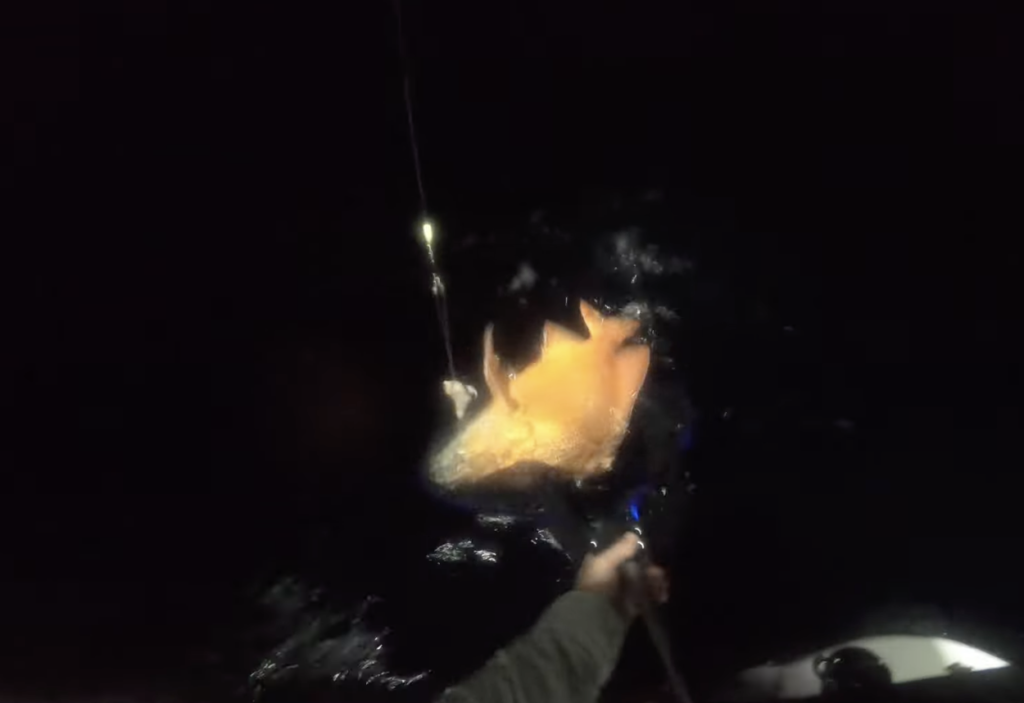
Try Red Emperor Fishing at Night
Reds will feed during daylight, but some of the biggest fish we caught came at night. If you know the area and are comfortable operating offshore after dark, fishing through sunset and into the evening is worth considering.
For red emperor fishing at night, there isn’t one magic hour that guarantees a bite. Current, location and bait presentation still matter, and conditions need to suit the boat and crew.
My red emperor fishing approach comes back to a few practical habits: search the paddock, fish suitable moving water, anchor away from the school, and use a tough cuttlefish bait on reliable tackle.
You don’t need to make it fancy. Put the effort into finding fish and presenting the bait properly, and give yourself a better chance of bringing home a quality feed. Before heading out, check current fishing limits, reef-fish closures and marine park zoning for your planned area.
More Fishing Guides & Resources
Want more practical fishing tips you can use straight away? Check out the latest Shannon’s Fishing PDF guides covering rigs, bait tricks, lure techniques, and proven methods for catching more fish around Australia.