
There is a point on a fishing trip when the light leaves the water and everything changes. You can no longer pick out every ripple, watch your line clearly, or see what is following your bait. You listen more. You pay attention to the current, the sound of bait scattering, and the way a rod tip moves against the dark.
Night fishing with bait is the kind of fishing that made me want to stay out long after other boats had gone home. I have spent years chasing big mulloway down south with live and dead baits. Now I am based in Cairns, and I want to bring that same patience to the rivers, inlets and reefs of North Queensland. Some trips will produce fish. Others will teach me that I was in the wrong place, at the wrong time, or presenting the wrong bait. I intend to show both.
This is the home for those nights. It explains how I think about bait, water, rigs and the small decisions that keep me in the game. As I film new trips, I will add them below so you can see the methods tested on the water, including the underwater Strike Cam footage when I get it.
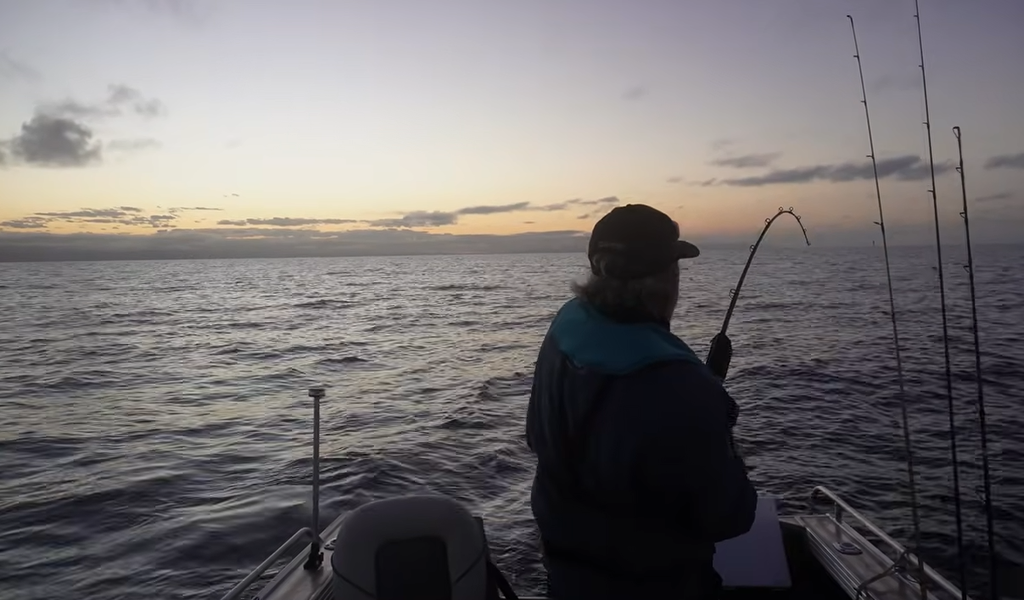
Why I Keep Coming Back to Night Fishing with Bait
I like fishing when there is a genuine chance of something big arriving without warning. After dark, you cannot rely on a perfect view of the water or a steady stream of visual clues. You need a reason to choose your position and the patience to let a bait work.
Live bait gives me movement. Dead bait gives me scent, a simpler presentation, and an option when keeping a bait alive is difficult. I use both because they solve different problems. I check whether the live bait is working and whether the dead bait is still fresh before blaming the spot. A good night is rarely about insisting on one method before I have seen what the water is doing.
My background is in putting in the hours for mulloway, snapper and other serious fish. The move to Cairns has given me unfamiliar water and new opportunities. I am still learning where and when to spend those hours here. I would rather say that plainly than pretend every new mark on a sounder is a secret spot.
For me, night fishing with bait also makes a better story than a list of catches. There is the effort of finding bait, the choice of where to set up, the long quiet periods, the adjustments and, sometimes, the fish that tests every part of the outfit. On an offshore trip there may be a hot coffee and an Aussie snag in the middle of the night, followed by the run home at sunrise. That is a real part of the trip, not a cooking show.
Start With a Reason to Fish a Place
A lively bait in empty water is still a bait in empty water. Before I rig anything, I want to know why a fish might move through the area. I look for food, a useful edge or piece of structure, and a current that carries the bait into a place a predator can work.
In an estuary, that might mean a deeper channel beside a shallow feeding area, a river mouth, or a point where the tide funnels water past structure. Around a reef it could mean a current edge, the shoulder of a bommie or a patch of broken bottom beside deeper water. I pay more attention to the relationship between these features than to a number on the GPS by itself.
That does not mean every piece of structure is worth hours. If I see no bait, no movement and no useful current, I consider another position. If I do see signs of life, I may give the spot time even when the first hour is quiet. Night fishing with bait asks for patience, but patience works best when you have a reason to stay.
Reading current, tide and bait movement
The tide matters because it changes how food travels through a place. The strongest flow is not automatically the best flow. I want enough movement to deliver a bait naturally while still being able to hold it where I intend. Sometimes that means adding weight. Sometimes it means taking weight off and letting the bait swim or drift.
I also watch for what happens as the water changes. A bait school moving over a shallow edge, a sudden line of nervous water or fish showing on the sounder can be more useful than a rule about a particular hour of the tide. I keep notes because a pattern seen on several trips is worth much more than a confident guess after one.
Where I would look from shore and boat
From shore, access and safe footing come first. River mouths, rock walls, beaches and channels can all be productive, but each fishes differently. A long cast into nowhere does not help if the fish are hunting close to a gutter or moving along the wall at your feet.
From a boat, I can position a bait around a reef edge or channel and adjust its depth with more control. That freedom brings more decisions: anchoring or drifting, keeping the boat clear of structure, managing other lines and planning a safe route home. A good boat position is one I can fish properly after dark, not merely a promising mark in daylight.
Night Fishing with Bait: Live or Dead?
There is no honest answer that says one always wins. I think about what I can catch or obtain legally, what the target fish are likely to encounter in that water, and whether I can present it well for the whole session.
A live bait that is stressed, spinning or pinned in the wrong place can be less convincing than a fresh dead bait fished cleanly. A dead bait that has gone soft and washed out has its own problems. Quality and presentation matter more than the label on the bait tub.
If I have suitable live bait, I normally want at least one working properly in the spread. I also like the option of a fresh dead bait, especially when I want scent in the current or when the live bait supply is limited. Night fishing with bait becomes easier to understand when you give each bait a job and pay attention to the results.
Here is how I would compare them on a real trip. If the live bait is lively and I can keep it where predators travel, I give it time. If the live bait keeps swimming into the bottom or drawing small pickers, I change the way I present it. If a fresh dead bait holds its shape and puts scent into a useful current, I will fish the dead bait with confidence. When a dead bait comes back stripped or washed out, I replace it. The rod that gets a bite tells me more than an argument in the tackle shop. Night fishing with bait works best when I treat both options as tools, observe what happens and adjust one thing at a time.
What a live bait needs to do
The bait should arrive at the spot in good condition, stay lively and have room to behave naturally. That starts before the hook goes in. Avoid overcrowding a bucket or well, keep the water suitable for the species, and handle bait with care. I would rather fish fewer healthy baits than load up on fish that will be struggling before dark.
Hook placement depends on the bait, where I want it to swim and whether it will be suspended, drifted or fished near the bottom. I check it after deployment: is it swimming, tangling the leader or repeatedly finding the structure? If it is not working, I change something rather than leaving it out because it looked good in my hand.
I have a separate live bait fishing guide for anglers who want to spend more time on bait care and presentation.
What makes a dead bait worth fishing
Freshness is the first test. A firm bait that stays on the hook and presents cleanly gives me more confidence than a worn-out bait I am reluctant to replace. I rig it so the hook point stays clear and the bait sits as naturally as the current allows. If the bait spins, folds up or disappears to pickers, I have learned something and need to adjust.
A whole bait, strip or cut bait may each have a place, depending on what I am targeting and how I am fishing. I am careful about making universal claims here. A bait that is perfect for one deep reef or river channel may be awkward in a shallow run with heavy current. Night fishing with bait is as much about solving that local presentation problem as it is about choosing a species.
Rigs I Trust More Than Complicated Gear
After dark, I want a rig I can tie and check without making a mess on the deck. The job is straightforward: put the bait in the feeding zone, let it move naturally enough to be eaten, and give me a fair chance of turning the fish before it reaches trouble.
For a bait fished near the bottom, sinker weight should match the flow and the depth. Too little and I cannot control the bait; too much and I can pin it unnaturally or make the take feel wrong. With a live bait, I am also careful about leader length and hook placement so it cannot wrap everything in sight.
For a bait suspended higher in the water, I want to know where it is relative to the bottom, boat and current. Fish do not always feed at the depth I expected. I will move a bait if the sounder, the baitfish or the bites give me a reason to do it.
Hooks, leader and drag for a possible big fish
I choose the hook for the bait and target fish, then make sure it is sharp and positioned to find purchase. Leader strength is a compromise between presentation and abrasion resistance. Around rough ground, thin leader can cost me a fish in seconds. Going excessively heavy in clear or quiet water can also change how a bait behaves.
I check knots, swivels, connections and drag before the light goes. A surprising number of lost fish are really preparation failures exposed by a hard run. Once the rod loads up, it is too late to wonder how old the leader is or whether the drag was set with the actual fish in mind.
My fishing rigs and knots articles cover more of the nuts and bolts. The point here is to keep the setup practical enough that I can maintain it through a long night.
If you are interested on the type of gear I use you can check out my Recommend Gear Page. I share what gear I never leave home without, Lure brands I like, Terminal tackle I use to make rigs, Reels I use and much much more.
The First Hour After Dark
I like to arrive with enough daylight to look at the water, find my bearings and prepare the bait. Darkness should not be the first time I discover a snag, a tricky boat position or an awkward path back from the rocks.
As the light fades, I pay attention to bait movement and any change in current. I set a simple spread that I can watch properly rather than putting out more lines than I can control. Then I let the baits work. Constantly pulling everything in can stop me learning whether the position is right.
That first quiet hour can be frustrating. I ask a few plain questions: Is the bait still healthy? Is it where I meant to put it? Are small fish stripping a dead bait? Has the boat swung away from the edge I came to fish? Night fishing with bait rewards these checks more than wishful thinking.
When to Stay, Move or Change Baits
I do not want to leave a good spot five minutes before fish arrive. I also do not want to defend a bad decision for six hours. The difference is evidence. Bait on the sounder, a bite, a live bait suddenly panicking or a useful tide change can justify staying. Lifeless water and badly presented baits tell me to reconsider.
My first adjustment is often small. I might change depth, weight, the distance from the structure or the kind of bait on one rod. If I change everything at once, I learn very little from the next bite. If the area still gives me no reason to believe, I move while there is enough time to fish another place properly.
Keeping a short trip log helps. I record where the bait sat, what the current was doing and when anything changed. On an unsuccessful trip, those notes give me something useful to take home. I have already had nights around Cairns with suitable live bait and no action. I am not going to turn a blank trip into a claim that I have cracked the inlet.
From Southern Mulloway to North Queensland Reefs
Down south, a big part of my fishing identity came from long sessions for large mulloway. They demanded persistence, good bait and the willingness to keep working when the easy bite never arrived. That experience still shapes how I think after dark.
Cairns is different water. I am interested in estuary predators, reef fish and anything powerful enough to test the tackle, but I am still building firsthand knowledge of these northern spots. I will use what my years on the water have taught me and let the results correct what does not transfer.
The reef trips are the direction I am most excited to film. Catch bait in the afternoon, set up around suitable ground, fish through the dark, and head home with the sunrise. On the right night, the Strike Cam might show what happens around a bait before the rod even moves. On another night, the camera might show why a bait is being ignored. Both are worth learning from.
Night fishing with bait on the Great Barrier Reef is a different proposition from watching a rod in a sheltered river. Weather, distance, navigation, reef zoning and the trip home all affect the plan. I pick the night and the ground for the conditions and the boat, rather than making a long run just because the video idea sounds good.
What the Strike Cam Can Tell Us
An underwater camera will not magically find fish. It can, however, answer questions that a rod tip cannot. Did a predator follow and reject the bait? Was the live bait swimming naturally? Did another fish take the dead bait before the target had a chance? Was the strike as sudden underwater as it felt in the boat?
I want to use that footage as evidence, not decoration. If the camera shows a bait spinning on a leader, I should fix the rig. If fish inspect it and move on, I can think about bait size, placement or timing. If something big takes it, you will see as much of the encounter as the camera actually captured.
That is also why I will keep the filming honest. Some nights the most useful footage might be an unexpected visitor rather than the monster I hoped for. Night fishing with bait involves uncertainty; pretending I knew the outcome in advance would take away the best part.
A Practical Night Trip Checklist
I keep the basics straightforward so I can spend my attention on fishing. Before leaving, I want a workable plan for the weather, the water and the trip home.
- Bait: A realistic way to catch or obtain legal bait, and a way to keep live bait in good condition if I am using it.
- Tackle: Rods, reels, suitable line and leader, sharp hooks, spare rigs, sinkers and tools I can find in the dark.
- Light: A dependable headlamp or working light and a spare source, used without ruining my ability to see and move safely.
- Boat or shore access: A safe position to fish, room to handle a fish, and a clear route back.
- Weather and communication: Current forecast, charged communication equipment, and a plan that suits the vessel and distance.
- Rules: The applicable fishing limits, bait rules, closures and marine park zones checked for the exact area.
- Filming: Charged cameras and batteries, clear lenses, secure mounts, and enough light to record the story without getting in the way of fishing.
For Queensland trips, I check the Queensland recreational fishing rules, the Reef Authority zoning maps when I am heading to the reef, and the Bureau of Meteorology marine forecasts. Rules and conditions can change, so I check again before each trip rather than relying on what worked last time.
The Mistakes That Can Ruin a Long Night
The first is fishing tired or poorly presented bait because changing it feels like work. The second is setting up in the first comfortable place without asking why fish would feed there. The third is using tackle that cannot cope with the structure I deliberately chose.
Another mistake is measuring the whole trip by one rod going off. On a quiet night I want to know whether I saw bait, whether the tide behaved as expected, and whether my rig stayed in the zone. Those observations help me fish better next time; an empty esky alone tells me almost nothing.
Finally, there is the temptation to force a trip when the conditions are wrong. Night fishing with bait will always involve waiting for fish. It should not involve ignoring a poor marine forecast to meet an upload schedule. I would rather make the next trip on a night when I can concentrate on fishing and get home comfortably.
Follow the Night Trips as They Happen
This section will grow with the actual trips. Each new report will link to the video and explain the water, bait, approach, result and what I would change. I am not filling it with invented catches before I have made the trips.
Cairns estuary and inlet nights
I am exploring the inlets and surrounding water with live bait, looking for a pattern I can return to. Early sessions have reminded me that good bait and a promising tide do not guarantee a bite. As I get clearer results, I will link the full reports here.
Great Barrier Reef nights
The plan is to fish suitable reef ground from late afternoon into the night, make time for hot coffee and an Aussie snag, and troll home around sunrise when conditions allow. I want to find out what visits the bait after dark, both on the rod and through the Strike Cam. Future trip stories and videos will go here.
Southern lessons I still use
My older mulloway work remains part of this story. If you want to see the foundations of my approach, start with my mulloway fishing guide and then compare those decisions with what happens on the northern trips. Different water will demand different choices, but the habit of reading bait, current and structure carries over.
My Approach to Night Fishing with Bait
I am not chasing a perfect-looking trip. I am chasing the chance to connect with a serious fish, understand why it happened and bring you along for the whole night. Some nights that means a big fish beside the boat. Some nights it means a broken leader, bait that vanishes, or a long ride home with a better question than the one I started with.
If you are planning your own session, start with a place that gives fish a reason to visit. Bring the best bait you can manage, present it properly and be willing to adjust when the water tells you something. Give a promising position time, but keep asking whether the evidence supports staying.
I will keep updating this pillar as the trips happen. Watch the Shannons Fishing channel for the nights on the water, and return here for the bait, rigs, observations and lessons behind each one. That is what night fishing with bait means to me: real hours, real decisions and the possibility of a fish worth staying awake for.
More Fishing Guides & Resources
Want more practical fishing tips you can use straight away? Check out the latest Shannon’s Fishing PDF guides covering rigs, bait tricks, lure techniques, and proven methods for catching more fish around Australia.