
Choosing the right offshore fishing lures can get confusing fast. Walk into a tackle shop and there are walls full of stickbaits, slugs, poppers, jigs, trolling lures, skirts, soft plastics and hard bodies. They all look good, but not all of them suit the same job.
After years of fishing offshore, trolling, casting, jigging and chasing everything from mackerel and tuna to dolphin fish, wahoo, reef fish, coral trout and trevally, I have found there are a handful of offshore fishing lures I keep going back to.
This guide breaks down the main lure styles I like using offshore around Australia, what they are good for, and when I would reach for each one.
Before heading offshore, always check the latest Queensland recreational fishing rules, especially around size limits, possession limits, closed waters and protected species.
Why Picking the Right Offshore Fishing Lures Matters
The biggest mistake many fishos make is buying lures because they look good, not because they match the bait, depth, target species or fishing style.
Offshore fishing lures need to do a job. Some are made for casting into surface-feeding tuna. Some are made for trolling at speed. Some are built to flutter down through reef country. Others are designed to imitate a wounded baitfish around FADs, reef edges and bait schools.
The lure that catches fish one day can be completely ignored the next if the bait profile is wrong. That is why I like to keep a simple spread of proven offshore fishing lures that cover the main situations I come across.
Casting Slugs and Small Sinking Stickbaits
Small metal slugs and sinking stickbaits are some of the best offshore fishing lures for chasing mackerel, tuna and surface-feeding fish.
I especially like small, skinny, baitfish-style profiles. When tuna or mackerel are feeding on tiny bait, a big bulky slug can be too large. Even if the fish are fired up, they may refuse it because it does not match what they are eating.
A small but heavy metal slug casts a long way, sinks quickly and looks more like the baitfish being chased. That is a big advantage when fish are busting up and moving fast.
With sinking stickbaits, I like to cast long, let the lure sink, then rip it back quickly through the water column. I do not always work them across the surface. A fast retrieve through the middle of the water column can be deadly on Spanish mackerel, spotted mackerel, longtail tuna and other pelagics.
Chrome, silver and natural baitfish colours are hard to beat, especially on sunny days when the flash helps the lure stand out.
Resin Casting Lures for Surf and Reef Fishing
Resin casting lures are another handy option. They are heavy, cast a long way and can be worked fast across the surface like a fleeing baitfish.
Down south, these can be excellent for tailor in the surf. They also have potential around shallow reef areas where trout, cod, red throat, trevally and other reef species may hit them.
These are not the first offshore fishing lures everyone thinks of, but they are worth carrying, especially if you like casting light gear and experimenting around shallow reef edges, bait schools and wash zones.
Visit Fishing Lures That Do the Job for the hard-bodied, surface and squid-style lures I recommend for particular situations.
Micro Jigs and Flutter Jigs
Micro jigs and flutter jigs are very useful offshore fishing lures because they cover deeper water and reef country well.
There are two main styles I like to think about.
The first is the slim knife-style jig. These are better when you want to get down quickly and work the lure hard through the water column. They can be good for mackerel, tuna, kingfish and other fast-moving predators.
The second is the wider flutter jig. These are made to dart up when lifted, then flutter back down like a wounded baitfish. That fluttering fall is where a lot of fish hit.
Flutter jigs can catch a wide variety of species. Down south, they work on snapper, jewfish and cobia. Up north on the reefs, they can catch coral trout, red emperor, nannygai, cod, red throat and plenty of other reef fish.
For best results, use the right rod. A soft-tipped slow pitch or jigging rod helps flick the jig up properly, then lets it flutter back down naturally.
Jerkbaits for Mackerel, Tuna and Reef Fish
Jerkbaits are underrated offshore fishing lures. A lot of fishos think of them as estuary or shallow-water lures, but they can work very well offshore.
Small jerkbaits can be deadly around mackerel schools, especially spotted mackerel and smaller Spanish mackerel. They only dive a metre or so, but that is often enough when fish are feeding close to the surface.
They are also worth throwing around tuna schools if the fish are feeding on bigger bait like yakkas or slimy mackerel. If the bait size matches, a jerkbait can get smashed.
Around northern reefs, jerkbaits can catch all sorts of species, including trevally, coral trout, mackerel and reef predators hunting over shallow ground.
Surface Lures, Poppers and Stickbaits
Surface fishing is one of the most exciting ways to use offshore fishing lures. Nothing beats seeing a fish explode on a popper or stickbait.
Poppers are great when you want to push water, make noise and draw fish up. A medium-sized popper can be used for Spanish mackerel, tuna, trevally and other aggressive pelagics.
Stickbaits are another favourite. Floating stickbaits can be worked across the surface around tuna, mackerel, trevally and reef edges. Sinking stickbaits also have their place when you want the lure to sit slightly deeper.
Down south, surface lures can work on tuna, tailor and salmon. Up north, they can catch almost anything around the reef if the water is shallow enough and fish are hunting high in the water column.
Slug-Go Style Soft Plastics
Large Slug-Go style soft plastics are deadly offshore fishing lures, especially around dolphin fish.
These long soft plastics have an incredible wounded baitfish action. When you rip the rod tip, they dart off to one side, then glide and sink like a dying baitfish. That action can be too much for predators to resist.
Dolphin fish around FADs love them. If you find a school of dollies, casting one of these plastics and twitching it through the school can produce savage strikes.
They can also be used around reefs, bait schools and shallow structure. The downside is they may not last long around toothy fish and reef species, but while they last, they can be very effective.
Hardbody Trolling Lures
Hardbody trolling lures are must-have offshore fishing lures for covering ground.
A good trolling lure needs to swim properly at speed. Cheap lures often blow out, roll or stop tracking when pushed harder. That wastes time and costs fish.
Samaki Pacemakers are one of my favourite hardbody trolling lures because they swim well at pace. They can be trolled faster than many standard hard bodies and are good for tuna, mackerel, wahoo and dolphin fish.
Rapala CD lures are another old favourite. The classic metal-bib models have caught plenty of fish over the years, including tuna, mackerel and wahoo. They can be harder to find now, but they are proven lures.
Hardbody trolling lures are perfect when you are searching for fish, working bait schools, trolling reef edges or moving between areas.
Trolling Skirts for Marlin, Tuna, Wahoo and Dolphin Fish
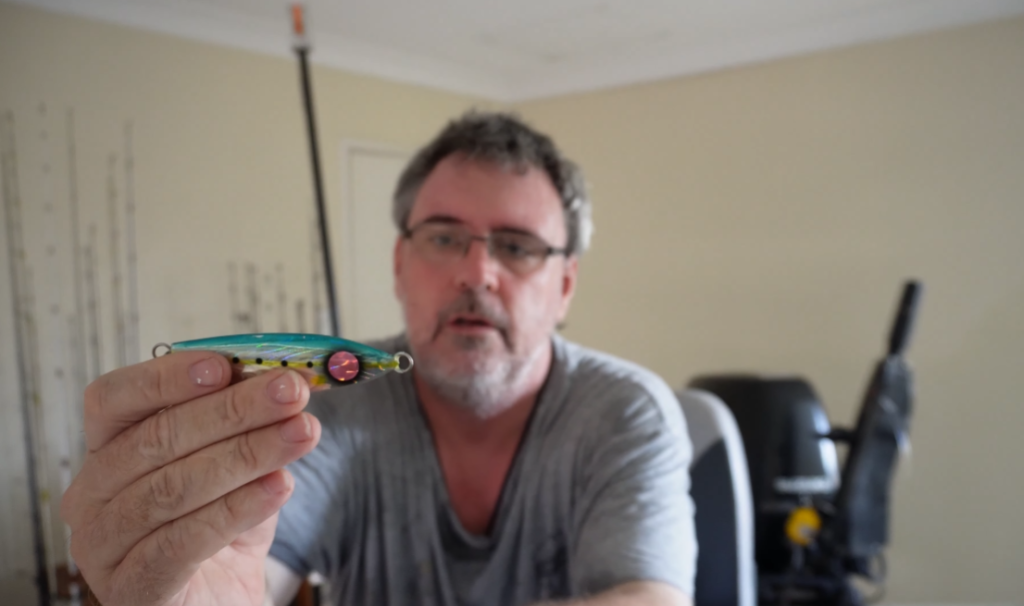
Trolling skirts are another key part of an offshore spread.
There are endless skirt brands, head shapes and colours, but one of my all-time favourites is the Pakula Cockroach style head. It pushes water, makes noise and gets attention.
Black and purple is one of my favourite colour combinations. It is a proven colour that works on a wide range of pelagic species, including small black marlin, striped marlin, tuna, wahoo and dolphin fish.
When trolling a skirt pattern, the goal is to create commotion and make the spread look alive. A good skirted lure can raise fish from a long way off.
High-Speed Trolling Lures
High-speed lures are some of the best offshore fishing lures when moving between spots.
Instead of running from mark to mark at full speed and wasting fishing time, you can slow down slightly, put a spread of high-speed lures out and keep fishing while travelling.
Hex-head style metal lures are excellent for this. They are heavy, tough and can be trolled around 12 to 15 knots. They are especially good for wahoo and tuna.
I like running a pattern of three to five lures in different colours. Purple, green, gold, black and darker colours can all work. For wahoo, wire rigs and strong hooks are important because these fish hit hard and have serious teeth.
High-speed trolling is simple, but it can turn travel time into fish-catching time.
Final Thoughts on Offshore Fishing Lures
You do not need every lure in the tackle shop to catch fish offshore. What you need is a practical selection of offshore fishing lures that cover casting, jigging, surface fishing, trolling and high-speed searching.
For casting at tuna and mackerel, carry small heavy slugs and sinking stickbaits. For reef fishing, keep flutter jigs, micro jigs, jerkbaits and soft plastics handy. For surface action, have a couple of poppers and stickbaits ready. For covering ground, use proven hardbody trolling lures, skirts and high-speed lures.
The main thing is to match the lure to the bait, the depth, the target species and the way the fish are feeding.
Spend your money on lures that swim properly, cast well and suit the job. Good offshore fishing lures do not just look pretty in the tackle box. They catch fish.
More Fishing Guides & Resources
Want more practical fishing tips you can use straight away? Check out the latest Shannon’s Fishing PDF guides covering rigs, bait tricks, lure techniques, and proven methods for catching more fish around Australia.