
Chasing Mulloway—commonly known as Jewfish—is often seen as the ultimate challenge for offshore anglers on the Gold Coast. Many people put way too much effort into the technical side, but once you master the basic foundations of how to catch Jewfish, they aren’t that hard to find. The real trick isn’t just finding them; it’s stopping a 15kg+ trophy from “dusting” you on a ledge or concrete block.
If you are fishing the artificial blocks or the deeper reefs in 30 to 35 meters, you need a heavy-duty approach. Here is exactly how to catch Jewfish using my proven offshore methods.
Don’t Underestimate the Gear Required
When you are learning how to catch Jewfish around heavy structure like the artificial blocks, light gear is a recipe for heartbreak. These fish know exactly where the ledges are and will head straight for them the moment they feel the hook. I recommend a heavy 24kg (50lb) outfit, like a Shimano Torium or a Saltiga, paired with an 80lb leader.
While you can pull smaller schoolies on light snapper gear, a 15kg to 20kg trophy will peel 30lb braid off a reel so fast you won’t even have time to react. If you want to win the fight, you have to be able to “put the hurt” on them immediately to keep them away from the stones.
The Secret to the Running Sinker Rig
My go-to setup for those wanting to know how to catch Jewfish consistently is a simple running sinker rig. I use a heavy ball sinker (up to 10oz if the current is roaring) sitting above a lumo bead and two snelled 7/0 or 8/0 hooks.
The lumo bead serves two purposes: it adds a bit of visual attraction in the dark and protects your knot from the heavy sinker banging against it. When you drop this down, keep your thumb on the spool. If the sinker drops faster than the bait, you’ll end up with a tangled mess before you even hit the bottom. Keep them in contact all the way down.
Position Your Bait “Off the Bottom”
A common mistake when figuring out how to catch Jewfish is leaving the bait sitting directly in the sand. Once your sinker hits the bottom, wind it up about half a meter to a full meter.
Live baits naturally want to hide in holes or caves for safety. By keeping them a meter off the seabed, they stay visible and vulnerable to patrolling predators. Put the rod in a sturdy holder, set the drag just enough to set the hook, and wait for the rod to double over as the fish runs.
Why Pike are the Number One Bait
While many people struggle at the bait reefs in the morning, the real pros know that Longfin Pike are the “silver bullets” for big fish. Understanding bait behavior is a vital part of how to catch Jewfish after dark. The best part? You don’t even need to catch them in the daylight.
About 30 to 45 minutes after the sun goes down, the Pike move onto the reefs in thick numbers. Use a small jig head with a bit of pilchard to catch your fresh bait right where you are fishing. A live Pike on the reef is the most effective way to ensure you are targeting the big models.
The “Laps” Theory: Patience is Key
Jewfish are like sharks or tailor; they tend to move in cycles or “laps” around a reef or block. Many anglers see the bite go quiet for 20 minutes and decide to go home. This is the wrong move if you want to master how to catch Jewfish.
Don’t leave! If you’ve found a good ledge or a pocket of bait, stay put. Often, the school will circle back around, and both of your rods will go off at the same time. If the weather is good and you’ve got the time, stay through the cycle.
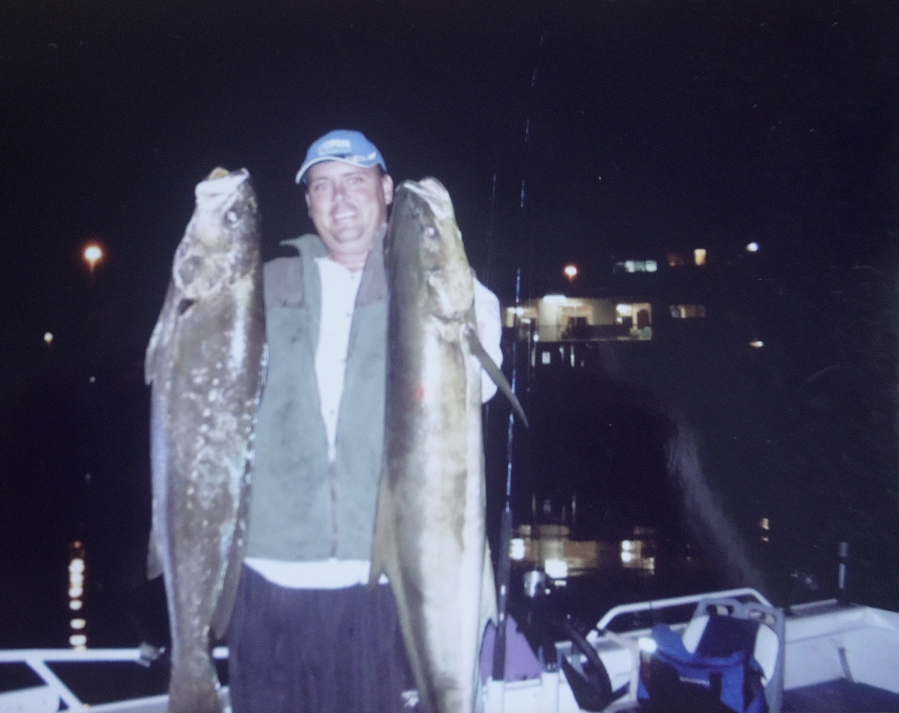
Safely Handling Your Catch
Jewfish have raspy teeth and incredibly sharp gill rakers. Never stick your hand inside the gills to retrieve a hook. They will cut you to shreds, and the slime on their gills ensures it stings for days.
Always carry a long-reach d-hooker or simply cut the leader if the fish is hooked deep in the gills. It’s better to lose a 50-cent hook than to end your night with a trip to the hospital. Make sure you are familiar with the Fisheries Queensland Size and Bag Limits before deciding to keep one for a feed.
7. Understanding the Tide and Moon
While everyone has an opinion on moon phases, the best time to go is simply when the weather is good. I personally avoid the full moon, but a new moon or a rising moon is fantastic.
In the Seaway, I prefer a high tide running out. By anchoring up-current and “bouncing” your bait back toward the pipe or ledge, you pull the fish away from the structure during the fight. This is the most effective strategy for how to catch Jewfish in high-current areas. You can check the Official QLD Tide Tables to plan your next trip.
Now that you know how to catch Jewfish with these simple rigs and tactics, it’s just a matter of putting in the hours. Get out there, stay quiet, and keep those baits off the bottom!
More Mulloway Fishing Guides
Read the full mulloway fishing guide
4 Best Rod and Reel for Mulloway Fishing
How to Catch Big Mulloway in Reefs: 9 Proven Stealth Secrets