
This practical live bait fishing guide covers the basic principles of choosing, caring for and presenting live bait for large predatory fish in Australian waters.
Live bait can be extremely effective because it provides genuine movement, vibration and scent. However, success depends on more than placing a bait in the water. Its condition, the way it is rigged and where it is presented can all affect the result.
About This Live Bait Fishing Guide
I’m Shannon from Shannons Fishing. I have spent many years using live bait to target large fish in Australian rivers, estuaries and offshore waters.
Much of what I have learned has come from time on the water—collecting bait, trying different presentations and observing how baitfish and predators behave.
This article explains the foundations. My complete live-bait guide goes further into the practical details, mistakes and methods that can make the difference between simply fishing with live bait and using it effectively.
Why Healthy Live Bait Matters
A healthy bait moves naturally and reacts to its surroundings. Its movement and vibration can help a predator locate it and may trigger a strike.
A badly stressed bait often loses that natural appearance. It may stop swimming properly, hang unnaturally in the water or become less attractive.
Pay attention to your bait throughout the session. Changes in its behaviour can tell you when something is wrong—and sometimes when a larger fish is nearby.
Keeping bait healthy is one of the most important parts of live-bait fishing. It is also an area where many anglers unknowingly make costly mistakes. This live bait fishing guide starts with bait health because every other part of the presentation depends on having an active bait.
Healthy live bait gives you a better chance of attracting a quality fish.
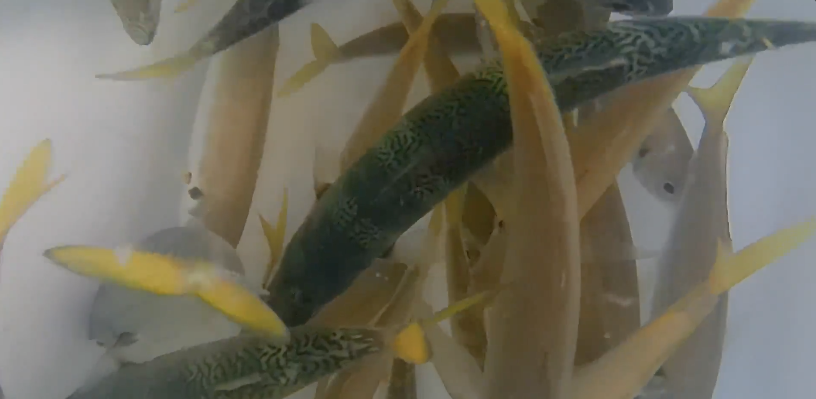
Choosing the Right Live Bait
Whenever possible, choose a bait species that naturally occurs in the area you are fishing.
Predatory fish are accustomed to feeding on the bait already present in their environment. The best choice will depend on your location, target species, fishing conditions and what is legally available.
Potential live baits in Australian waters include:
- Mullet
- Herring
- Hardyheads
- Garfish
- Prawns
- Squid
- Other legal local baitfish
Bait size also matters. Bigger bait does not automatically guarantee a bigger fish. The bait must suit the target species and remain capable of swimming naturally with the tackle attached.
Select active, undamaged bait whenever possible. A smaller number of healthy baits is generally more valuable than a large supply of badly stressed ones.
Fish collected for bait remain subject to applicable Queensland fishing rules, including size limits, possession limits, closures and protected-species restrictions. Check the current Queensland recreational fishing rules before collecting or transporting bait. The aim of this live bait fishing guide is to help you make better choices without overcomplicating your fishing.
How to Keep Live Bait Alive
Poor bait care can ruin a fishing session before the first bait reaches the water.
Bait needs suitable water, oxygen, space and protection from excessive heat. Overcrowding and rough handling can rapidly turn good bait into weak bait.
The basic principles are:
- Use a suitable bait tank or container.
- Provide adequate aeration or water circulation.
- Avoid overcrowding.
- Keep the bait shaded where possible.
- Handle every bait gently.
- Remove dead or badly damaged bait.
- Monitor the bait throughout the trip.
The details matter. Tank size, water movement, temperature, bait numbers and handling methods can all influence how long a bait remains healthy.
My complete guide explains these areas in more detail and shows how to avoid the common problems that weaken or kill bait.
Watch: How to Keep Live Bait Alive
In this video, I explain seven common mistakes that kill live bait in tanks, buckets and livewells.
The video provides a useful introduction. The complete written guide below brings the important information together so you can keep it available when preparing for a fishing trip.
Understanding Hook Placement
The position of the hook affects how a live bait swims, where it travels and how long it remains healthy.
Different fishing situations may require the bait to swim forward, remain at a chosen depth or move close to structure. That means one hook position will not be ideal for every bait and every situation.
The hook must hold securely without unnecessarily restricting or badly injuring the bait. Its point must also remain clear enough to hook the predator.
This is one area where small changes can produce very different results. My complete guide explains the different hook positions, when I use them and the common mistakes to avoid.
Choosing a Live Bait Rig
A useful live bait rig should be strong enough for the target fish while still allowing the bait to behave naturally.
The three main considerations are:
- Leader strength
- Hook size and style
- The amount of weight used
Heavy tackle may be necessary around rough structure or powerful fish, but unnecessary weight and oversized components can restrict a smaller bait.
Clear water, strong current, depth, target species and nearby structure will all influence the rig.
There is no single rig for every live-baiting situation. The complete guide explains how these parts work together and how to make a more suitable choice for the conditions.
Presenting Live Bait Naturally
Even a healthy, correctly rigged bait needs to be placed where predators can find it.
Large fish often use current, depth and structure to find feeding opportunities. Productive areas can include creek mouths, drop-offs, submerged timber, rock bars, pylons, reef edges and bait schools.
Think about:
- Where the target fish may be holding
- The direction of the current
- The depth of the bait
- Nearby snags or structure
- Whether the bait is still swimming correctly
Avoid putting the bait in the water and ignoring it. Monitor the line, rod tip and bait’s behaviour.
A sudden burst of movement may mean a predator has approached. A bait that stops moving may be exhausted, tangled or damaged.
Common Live-Baiting Mistakes
Many unsuccessful live-baiting sessions are affected by a few repeatable mistakes:
- Carrying too many baits
- Poor water circulation
- Rough handling
- Using unsuitable tackle
- Adding excessive weight
- Fishing at the wrong depth
- Failing to check the bait
- Ignoring damaged leader
- Using the wrong technique for the chosen hook
Recognising these problems is the first step. Knowing how to correct them for different baits and conditions is where experience becomes important.
The complete guide below explains these problems in greater detail and provides practical ways to avoid them.
Live Bait Fishing Guide: Common Questions
This free live bait fishing guide provides the foundations, but consistently catching large fish requires a deeper understanding of bait care, rig selection and presentation.
What is the most important part of live-bait fishing?
Start with a healthy bait. An excellent rig cannot make a badly stressed or dying bait swim naturally.
What is the best live bait?
The best bait depends on the target species, location and conditions. A healthy bait naturally found in the area is often a sensible starting point.
Where should a live bait be hooked?
Hook placement depends on the bait and the presentation required. The objective is to secure it while allowing it to swim effectively and keeping the hook point exposed.
Should live bait be used with a sinker?
That depends on the required depth and current. Use enough weight to reach the strike zone without unnecessarily restricting the bait.
Can any fish be used as live bait?
No. Fishing rules, size and possession limits, closures, protected species and bait-movement restrictions may apply. Always check the current regulations for the area being fished.
Get the Complete Live-Bait Guide
This article provides the foundations, but consistently catching large fish on live bait requires more than a list of general tips.
My complete live-bait guide brings the important information together and goes further into bait care, hook placement, tackle selection, presentation and the common problems that reduce your chances of success.
It is designed to help you spend less time losing bait and more time presenting a healthy bait where a large fish can find it.
You can get the complete guide and see my recommended live-bait equipment below.